

Published: August 12, 2026

By Jack Martin — Grout & Tile Cleaning Specialist, 10+ years testing grout cleaning methods, 500+ products personally tried.
To remove most grout stains, blot the spill, scrub with a baking soda and hydrogen peroxide paste, and rinse. Use rubbing alcohol for ink, a plastic scraper for paint, degreaser for grease and soot, and an oxalic-acid cleaner for rust. Test every product on a hidden spot first.
- Match the fix to the stain: peroxide paste for coffee and wine, rubbing alcohol for ink, degreaser for grease and soot.
- For rust, start with lemon juice or vinegar, then an oxalic-acid cleaner. Never use chlorine bleach.
- Always test a hidden spot, and keep acids off natural stone.
- Cement grout is porous, so blot spills fast. Sealing buys you time.
- Old or widespread stains may need several rounds, or a pro.
8 Common Grout Stains and the Best First Fix
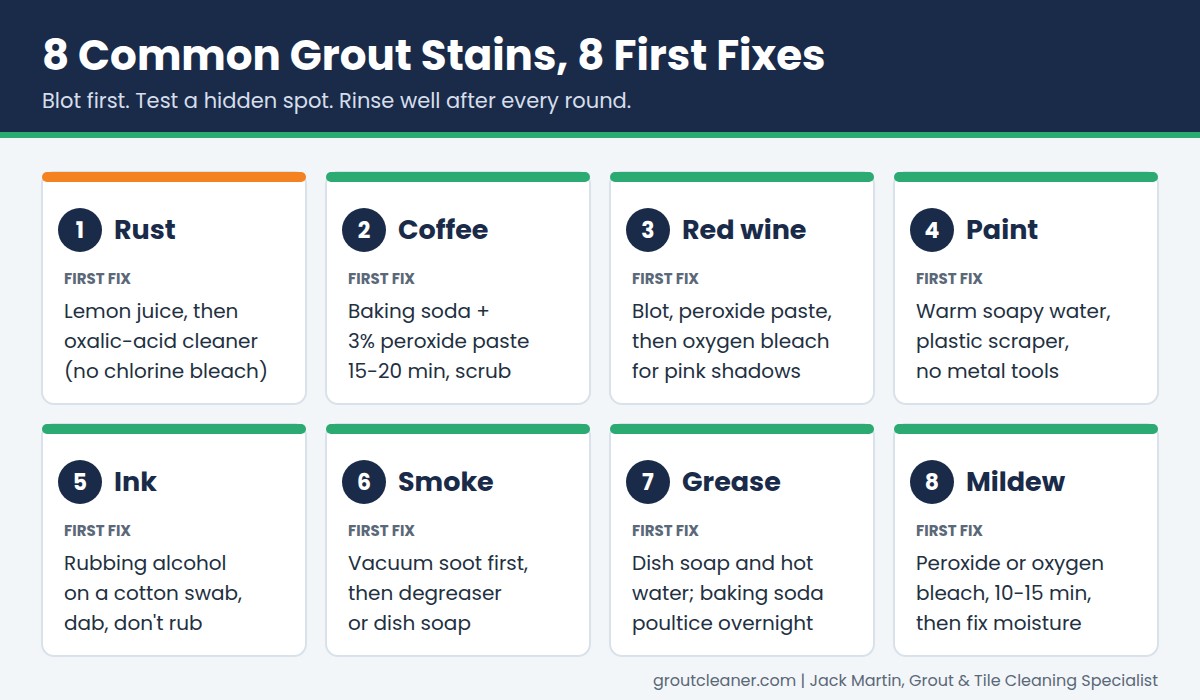
Most grout stains lift with a baking soda and hydrogen peroxide paste. Rust, ink, paint, and grease are the exceptions, and each needs its own fix, so use the table below to match the stain to the right first step.
| Stain | Common cause | Best first fix |
|---|---|---|
| Rust | Metal cans, caddies, iron in water | Lemon juice, then oxalic-acid cleaner |
| Coffee | Kitchen spills | Baking soda and peroxide paste |
| Red wine | Spills, dinner parties | Peroxide paste, then oxygen bleach |
| Paint | Wall painting, DIY jobs | Warm soapy water, plastic scraper |
| Ink | Pens and markers | Rubbing alcohol on a swab |
| Smoke | Fireplaces, kitchen fires | Vacuum soot, then degreaser |
| Grease | Cooking splatter | Dish soap, baking soda poultice |
| Mildew | Damp showers | Oxygen bleach or peroxide |
Before You Treat Any Grout Stains
Grout stains happen because cement-based grout is porous, so spills, minerals, and moisture soak in. Epoxy grout resists most stains, but cement grout doesn't, so it helps to know which you have. Test every cleaner on a hidden spot first, and use a nylon brush, never wire, which scratches grout and gives dirt more places to hide.
Safety first. Never mix bleach with ammonia or vinegar, wear gloves, and open a window. Acids can etch natural stone like marble and travertine, so skip them there.
How to Remove Rust Stains From Grout
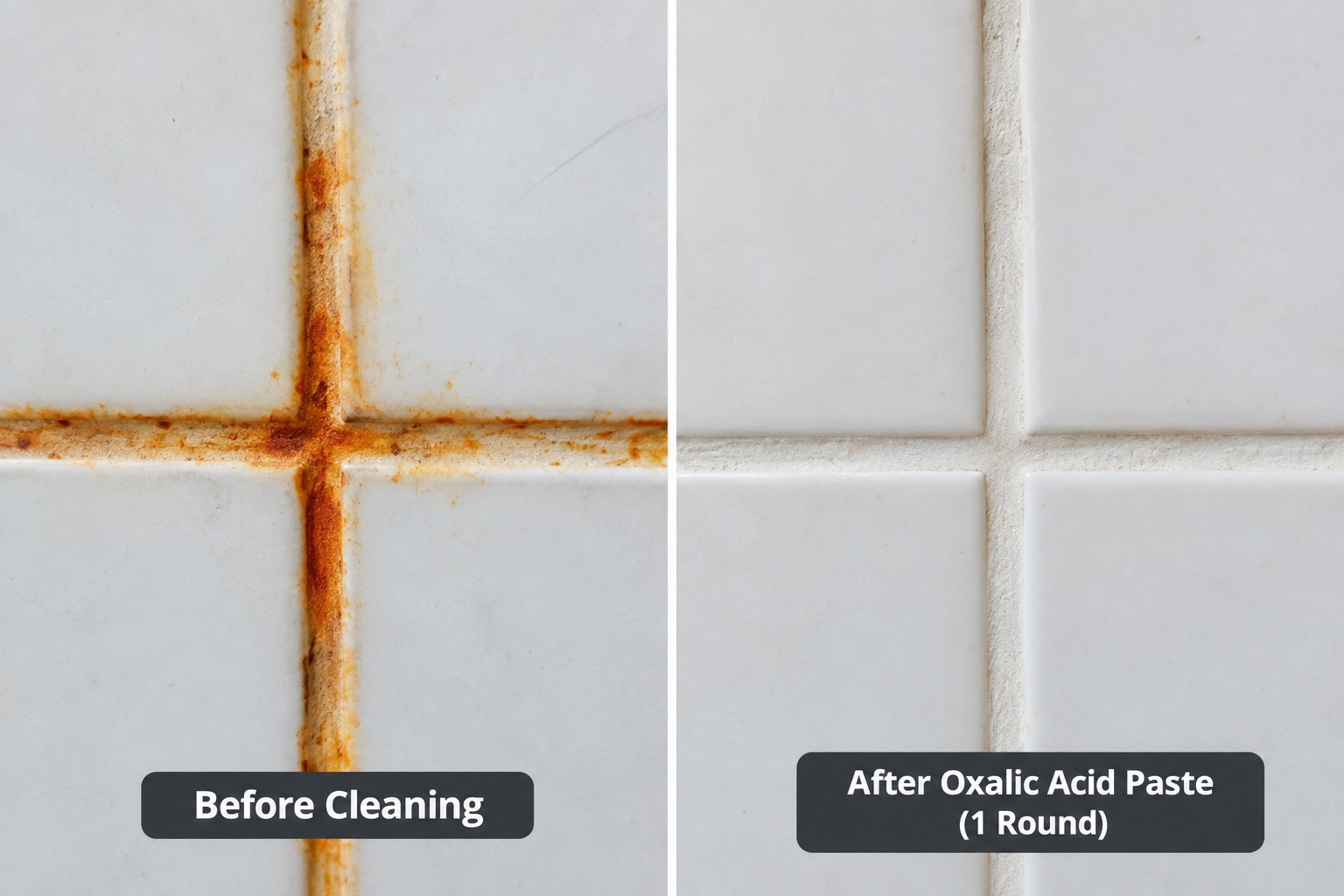
To remove rust stains from grout, soak light stains with lemon juice or white vinegar for 10 to 15 minutes and scrub. For stubborn rust, use an oxalic-acid paste, then rinse well, and skip chlorine bleach, which can set rust. Rust stains on tile grout show up as orange or brown streaks, and they almost always trace back to metal: a shower caddy, a can of shaving cream, a stray bobby pin, or iron in your water. If you're wondering how to get rust stains out of grout, start with the gentlest option and work up.
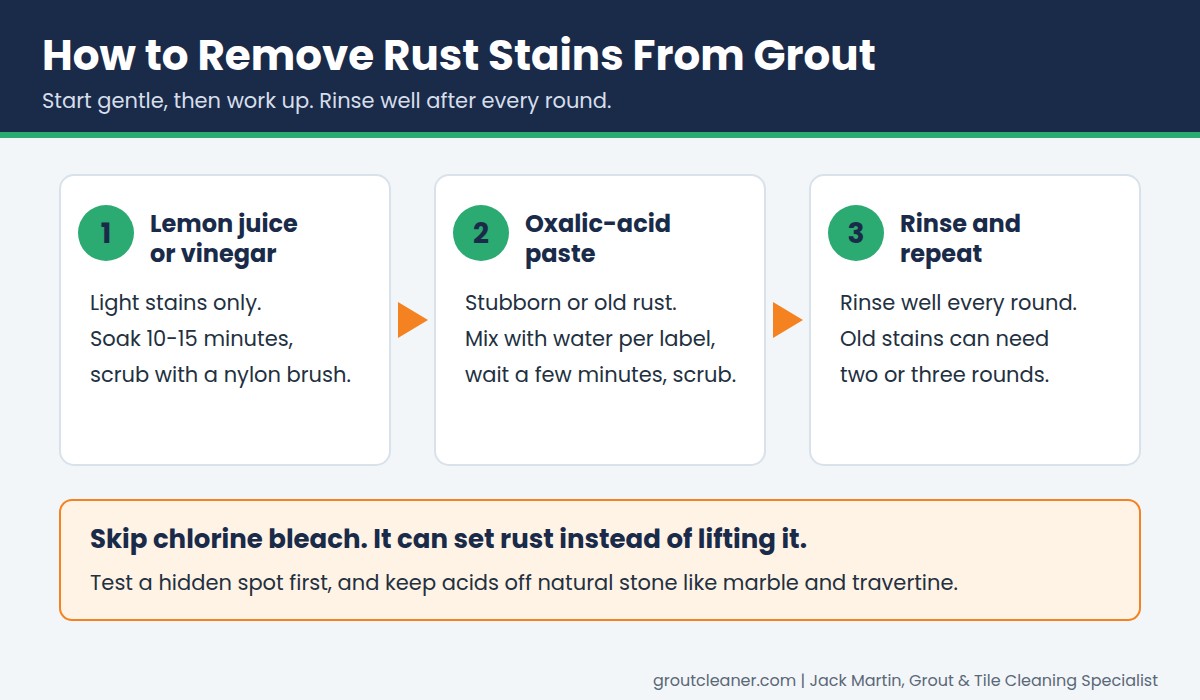
Here's how to remove rust stains from tile grout, in the order I try things:
- Lemon juice or white vinegar for light stains. Soak the grout for 10 to 15 minutes, scrub with a nylon brush, and rinse.
- An oxalic-acid cleaner for stubborn stains. Many powdered rust and stain removers contain it. Mix a paste with water per the label, spread it on, wait a few minutes, scrub, and rinse thoroughly.
- Repeat instead of soaking longer. Leaving acid on too long can etch cement grout.
Removing rust stains from grout takes patience, and old stains often need two or three rounds.
How to Clean Rust Stains From Shower Grout
Fix the source first, or the stains return. Swap rusty metal caddies for plastic or stainless steel, and check whether the orange comes from iron in your water. Then follow the steps above, ventilate the room, and rinse with plenty of water so acid doesn't sit on chrome fixtures and dull them. If iron-rich well water is the culprit, a water filter is the real fix.
How to Remove Rust Stains From Tile and Grout Together
Glazed ceramic and porcelain tile handle the steps above well, so you can treat the tile and grout in one pass. On unglazed tile or natural stone, try lemon juice on a test spot only, or ask a pro, because acid can leave dull marks that no scrubbing fixes.
Best Way to Remove Rust Stains From Grout: Methods Compared
Lemon juice handles light rust, and an oxalic-acid cleaner handles stubborn, set-in rust. Chlorine bleach is the one method to avoid, because it can set rust. The table below compares each option by speed and by risk to your grout and tile.
| Method | Best for | Time | Risk to grout and tile | Verdict |
|---|---|---|---|---|
| Lemon juice | Light, fresh rust | 10–15 min | Low. Test on stone | Try first |
| White vinegar | Light rust | 10–15 min | Low to moderate. Can etch cement grout if left on | Rinse well |
| Baking soda paste | Scrub aid for light rust | 15–20 min | Very low | Helps, but weak on set rust |
| Oxalic-acid cleaner | Stubborn or old rust | 5–10 min | Moderate. Not for natural stone | Best for set-in rust |
| Chlorine bleach | Not for rust | N/A | Can set rust and fade colored grout | Avoid |
| Local pro | Large areas, natural stone | Varies | Lowest risk to you | Worth it if stains return |
How to Remove Coffee Stains From Grout
Blot the spill, spread a paste of baking soda and 3% hydrogen peroxide, wait 15 to 20 minutes, scrub with a nylon brush, and rinse. This lifts most fresh coffee stains without harsh chemicals, which matters because coffee soaks into porous grout fast, especially light grout on kitchen floors. Peroxide can lighten dark grout slightly, so test first. For older stains, mix oxygen bleach with warm water per the label. I avoid chlorine bleach on colored grout because it can fade unevenly.
Red Wine Grout Stains: How to Lift Them Fast
Blot, don't rub, rinse with cool water, then apply the peroxide and baking soda paste. For a pink shadow that lingers, soak the spot in an oxygen bleach solution for 30 minutes. Sealed grout gives you time to react, while unsealed grout can drink wine in minutes, so the faster you blot, the less you'll have to scrub.
Removing Paint Stains From Grout
Wipe fresh latex paint with warm soapy water. For dried paint, soften it with warm water and lift it with a plastic scraper, and keep metal tools away, since they scratch grout. Use mineral spirits on a cotton swab only for oil-based paint, test it on a hidden spot first, and ventilate the room.
How to Get Ink and Marker Stains Out of Grout
Dab rubbing alcohol onto a cotton swab, press it onto the stain, and lift, changing swabs as they pick up ink, because rubbing spreads it. Follow with a baking soda paste and rinse. Permanent marker can take a few rounds and may leave a faint ghost.
Smoke and Soot Grout Stains
Vacuum loose soot first, then clean with a degreasing cleaner or dish soap in hot water. Wet wiping before vacuuming smears soot deeper into the grout, which is why the order matters near fireplaces or after a kitchen fire, when grout gets a gray film. Try oxygen bleach on yellow-brown nicotine tint. Heavy smoke damage after a fire is a job for a restoration pro.
Grease and Oil Stains on Grout
Grease and oil stains scrub with dish soap and hot water. For grease that's soaked in, spread a thick baking soda paste, cover it with plastic wrap overnight, then scrape and rinse. Backsplashes and kitchen floors are the usual spots, and you can repeat the poultice if a shadow remains.
Mold and Mildew Stains on Shower Grout
mold and mildew stains spray 3% hydrogen peroxide or an oxygen bleach solution, wait 10 to 15 minutes, scrub, and rinse. Then fix the moisture with an exhaust fan and a quick squeegee, or the stains return. Black or gray spots in a shower are the classic grout stains, and the EPA's mold guidance stresses moisture control as the key to keeping mold away. My bathroom grout cleaner guide covers tougher buildup.
How to Keep Grout Stains From Coming Back
Seal cement grout after a deep cleaning, wipe spills fast, keep rusty metal off wet surfaces, and run the fan after showers. Sealer buys you time to wipe a spill before it soaks in. See my grout sealer picks, use my homemade grout cleaner recipes for regular upkeep, and check my tested grout cleaners when stains keep returning.
Grout Stains: Frequently Asked Questions
What's the best way to remove rust stains from grout?
Start with lemon juice or white vinegar for light stains, then move to an oxalic-acid cleaner if the stain stays. Avoid chlorine bleach, test a hidden spot, and rinse well after each round.
How do I get rust stains out of shower grout without damaging fixtures?
Use the same lemon juice or oxalic-acid steps, but rinse with plenty of water and wipe chrome dry afterward. Acid left on fixtures can dull the finish.
Does baking soda remove grout stains?
Baking soda lifts light stains like coffee and grease because it's a mild abrasive, and it works best mixed with hydrogen peroxide. It won't dissolve rust or ink, so use lemon juice, an oxalic-acid cleaner, or rubbing alcohol for those.
Does vinegar remove rust from grout?
Vinegar can lift light rust in 10 to 15 minutes, but it's a weak acid, so stubborn rust may need an oxalic-acid cleaner. Rinse well, because vinegar left on cement grout can slowly etch it.
Is hydrogen peroxide safe on grout?
3% hydrogen peroxide is safe for most cement grout and breaks down into water and oxygen. It can lighten dark or colored grout slightly, so test a hidden spot first.
Can old grout stains be removed completely?
Often, but not always. Old stains soak deep into porous grout and may need several rounds. If a faint shadow stays, sealing or recoloring the grout can even out the look.
When should I call a pro for grout stains?
Call one when stains return after several tries, cover a large area, or sit on natural stone. You can find local grout cleaning pros with my ZIP code finder.