

Published: August 12, 2026

By Jack Martin — Grout & Tile Cleaning Specialist, 10+ years testing grout cleaning methods, 500+ products personally tried.
Cleaning grease stains from grout is harder than cleaning the tile beside it, because grout is porous. Cooking oil doesn't sit on top. It wicks down into the cement and leaves a dark, dull patch that soap never touches. I've tested over 500 products, and the pattern is always the same: an alkaline degreaser for fresh spots, a baking soda poultice for old ones, and sealer afterward. Here's how to get grease stains out of grout, step by step.
Key Takeaways
- Grease stains grout because the cement is porous and pulls oil down into it. Surface wiping won't fix that.
- Fresh spills: absorb first, then degrease with hot water and dish soap. It takes about 10 minutes.
- Old stains need a poultice, which draws the oil out instead of pushing it around.
- Bleach doesn't dissolve grease. It can lighten the stain while the oil stays in the grout.
- Sealing cleaned grout is the only thing that stops the stain coming back.
Why Grease Stains Grout So Stubbornly
Standard grout is cement, sand and pigment. Under a microscope it looks like a sponge, full of tiny channels. When cooking oil, butter or bacon fat lands on it, capillary action pulls the grease down into those channels. Within a day, bacteria and dust stick to the oil and turn it from yellow to brown to nearly black.
That's why a mop passes right over it. The surface looks clean, but the reservoir underneath keeps feeding the stain back up. Removing grease stains from grout means breaking down the oil and lifting it out of the pores. Cleaning the top layer isn't enough.
Epoxy grout is the exception. It's non-porous, so grease mostly stays on top and wipes off easily. Everything below is written for standard cement grout, which is what most homes have.
What You Need for Cleaning Grease Stains from Grout
You don't need anything exotic. Most of it is already under your sink:
- Baking soda (absorbs oil and acts as a mild abrasive)
- Dish soap with a strong degreasing formula, or an alkaline tile degreaser
- Hot water, in a spray bottle or small bucket
- Stiff nylon grout brush (never steel, which chews up the grout)
- Paper towels and a few microfiber cloths
- Plastic wrap and painter's tape for the overnight method
- Rubber gloves and a fan or open window
How to Clean Grease Stains from Grout: Fresh Spills
Speed matters here. Grease that's been in grout for an hour is far easier to remove than grease that's been there for a week. Here's my routine for a fresh spill:
- Blot, don't wipe. Press a paper towel onto the oil. Wiping spreads it into neighboring grout lines.
- Cover with baking soda. Sprinkle a thick layer over the grout and let it sit for 15 to 20 minutes. It soaks up oil sitting near the surface.
- Vacuum or sweep it up. Don't wet it yet. Wet baking soda goes gummy and traps oil.
- Apply hot water and dish soap. Squirt a few drops directly on the grout line, add a splash of hot water, and let it sit for 5 minutes so the surfactants can break down the fat.
- Scrub along the line. Use the nylon brush in short back-and-forth strokes, following the grout line rather than crossing it.
- Rinse and dry. Wipe with a clean, damp microfiber cloth, then dry it. Leftover soap film attracts new dirt.
How to Get Grease Stains Out of Grout: Old, Set-In Stains
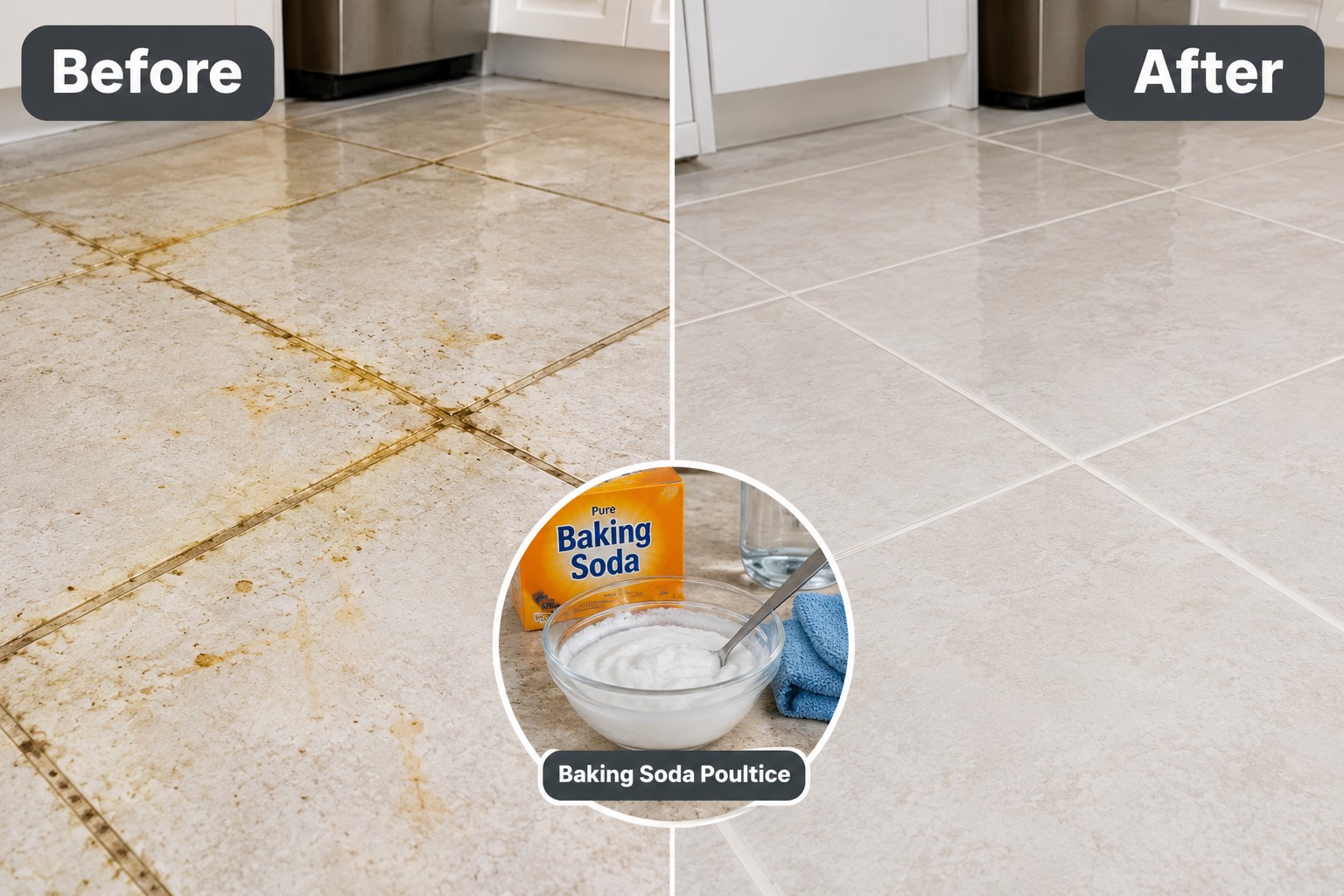
For stains that are days, months or years old, a poultice works better than any spray. A poultice is a paste that sits on the stain and pulls the oil up out of the pores as it dries. It's the same principle restorers use on stone.
- Pre-clean the surface. Scrub with hot water and dish soap first to remove any dirt sitting on top of the stain.
- Mix the paste. Combine baking soda with just enough hot water to make a thick, peanut-butter-like paste. For extra strength, replace half the water with a squirt of degreaser.
- Apply generously. Press the paste onto the stained grout about ¼ inch thick, extending slightly past the stain edges.
- Cover and wait. Wrap the area with plastic wrap, tape the edges down, and leave it for 12 to 24 hours. Keeping it moist gives the paste time to draw oil upward.
- Let it dry. Remove the plastic and let the paste dry completely. The oil migrates into the powder as the moisture evaporates.
- Scrub and rinse. Brush off the dried paste, scrub the grout with warm soapy water, then rinse and dry.
Really deep stains can take two or three rounds. I've had one behind a stove that needed three. The stain lightened each time, and that's the sign it's working.
Best Methods for Grease Stains Off Grout: Side-by-Side
Short answer: Baking soda with dish soap is best for fresh spills, a baking soda poultice for old set-in stains, and an alkaline tile degreaser for heavy cooking grease near the stove. Oxygen bleach helps with leftover discoloration, and mineral spirits suit petroleum grease in garages.
Not every method suits every stain. Here's how the main options for cleaning grease stains from grout compare, based on what I've tested:
| Method | Best For | Time | Strength |
|---|---|---|---|
| Baking soda + dish soap | Fresh kitchen grease spills | 15–30 min | Gentle |
| Baking soda poultice | Old, dark, set-in grease stains | 12–24 hrs | Medium–strong |
| Alkaline tile degreaser | Heavy cooking grease, stovetop areas | 10–20 min | Strong |
| Oxygen bleach soak | Grease plus dark discoloration | 30–60 min | Medium |
| Mineral spirits (spot use) | Petroleum grease in garages | 10–15 min | Very strong |
Best Cleaners for Grease Stains from Grout
If the home methods leave a shadow, step up to a purpose-made product. Look for one that lists alkaline or degreaser on the label and is labeled safe for grout. Acidic cleaners like vinegar aren't the right tool for oil, and they can etch cement grout over time.
For very old stains, oxygen bleach (sodium percarbonate) is worth a try. Mix it with hot water, apply it to the grout, and leave it for 30 to 60 minutes. It lifts the brown discoloration that comes with aged grease. Check my best grout cleaner roundup for the products I trust.
For garage or workshop grout with petroleum grease, dab a little mineral spirits on a cloth and blot the stain, working in a ventilated space. Keep it away from flames, and test in a hidden spot first.
Mistakes That Make Grease Stains on Grout Worse
- Using bleach alone. It whitens the stain but leaves the oil. The grease then keeps attracting dirt.
- Scrubbing with a steel brush. It roughens the surface and opens up more pores for oil to enter.
- Mixing cleaners. Never combine bleach with ammonia-based degreasers or vinegar. The fumes are dangerous.
- Using a dirty mop. A mop soaked in greasy water spreads a thin film across every grout line.
- Skipping the dry time. Damp grout hides remaining oil. Judge results only once it's fully dry.
Cleaning the floor around your kitchen is a separate job. I cover the whole-floor routine in my guide on removing grease from a kitchen floor. This article is about the grout lines themselves.
Troubleshooting: Cleaning Grease Stains from Grout That Won't Budge
Short answer: If grease stains on grout won't come out, oil is usually still deep in the pores. Repeat the baking soda poultice for another 24 hours, then use an oxygen bleach soak for leftover brown discoloration. Seal the grout once it's fully dry.
| Problem | Likely Cause | Fix |
|---|---|---|
| Grease stain looks lighter but is not gone | Oil still deep in the grout pores | Repeat the baking soda poultice for another 24 hours |
| Grease stain comes back after a week | Residual grease wicking back up to the surface | Do a second poultice, then seal the grout |
| Grout is still gray or brown after cleaning | Dirt bonded to the oil | Oxygen bleach soak after degreasing |
| White haze on grout after cleaning | Soap or baking soda residue | Rinse twice with clean water and buff dry |
| Grout feels rough or crumbly | Old, damaged grout | Re-grout the affected lines |
Still not sure which method fits your stain? Start with the fresh spill steps or the old stain poultice method above, then seal the grout to keep grease stains off grout for good.
How to Keep Grease Stains from Grout Coming Back
Once the grout is clean and completely dry, seal it. A penetrating sealer fills the pores so oil sits on the surface, where you can wipe it away in seconds. Most cement grout needs sealing every 6 to 12 months, and kitchens on the shorter end.
A few habits help too:
- Wipe splatters near the stove within a day.
- Use a rug or runner in front of the stove and sink.
- Mop with a small amount of dish soap in the water once a month to cut grease film.
- Reseal after any deep cleaning, since scrubbing wears down the old sealer.
FAQ: Cleaning Grease Stains from Grout
How do you remove grease stains from grout naturally?
Use baking soda and hot soapy water. Sprinkle baking soda on a fresh stain to absorb the oil, then scrub with dish soap. For old stains, leave a baking soda paste covered on the grout overnight, then scrub and rinse.
Does vinegar clean grease stains from grout?
Not well. Vinegar is an acid, and grease responds better to alkaline cleaners. Vinegar can also slowly wear down cement grout, so I skip it for grease.
Can you get old grease stains out of grout?
Yes, in most cases. Old stains need a poultice left on for 12 to 24 hours, sometimes repeated two or three times. If the grout stays dark after that, the stain may be dirt rather than oil, and oxygen bleach helps.
Will bleach remove grease stains from grout?
Bleach may lighten the discoloration, but it doesn't remove the oil. Degrease first, then use oxygen bleach if you still see staining.
How long does it take to clean grease stains off grout?
Fresh spills take 15 to 30 minutes. Set-in stains take 12 to 24 hours for the poultice to work, plus scrubbing time.
Final Thoughts
Grease on grout looks hopeless, but it isn't. Absorb it, break it down, pull it out of the pores, and seal it afterward. That order is what works. Start with the gentlest method, and only step up if the stain hangs around. If you're dealing with other marks too, my guide to common grout stains covers coffee, wine, rust and more.