


By Jack Martin — Grout & Tile Cleaning Specialist, 10+ years testing grout cleaning methods , 500+ products personally tried.
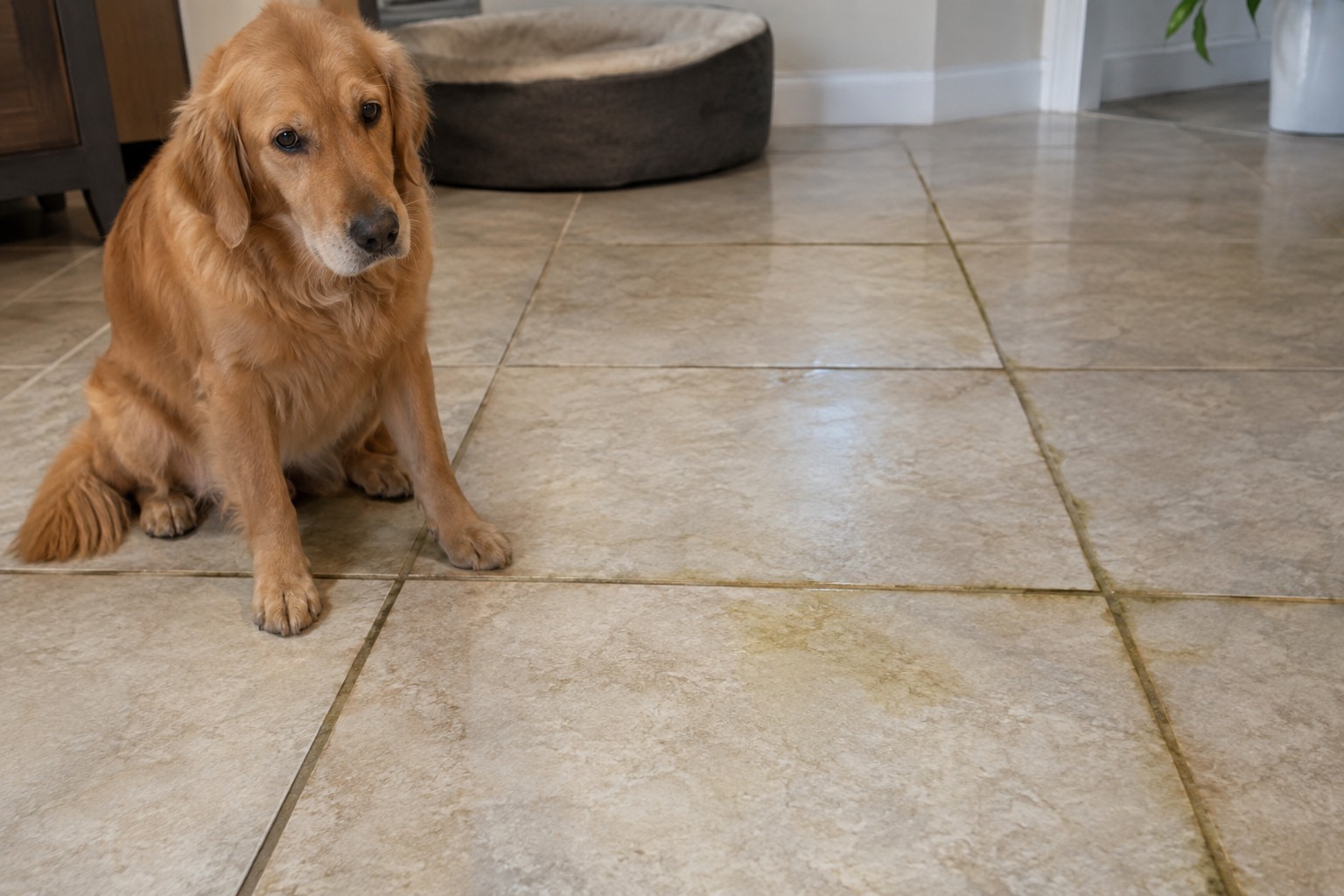
Dog urine smell in grout is one of the most stubborn odors I've dealt with. You mop, it smells clean for an hour, and then the odor creeps back. Glazed tile barely absorbs liquid, but cement grout is porous, so urine soaks in and dries into odor-causing residue. That's why dog urine grout smell survives ordinary mopping. Below, I'll show you how to get dog urine smell out of grout, what to do when the dog urine smell in tile grout keeps returning, and how to prevent it.
Quick Answer: How Do You Get Dog Urine Smell Out of Grout?
To get dog urine smell out of grout, blot up fresh urine, clean the tile, apply an enzymatic pet-odor cleaner, and let it dwell for the time on the label. Scrub the grout lines with a nylon brush, rinse as directed, and dry completely. Repeat if the smell lingers.
If the odor keeps returning after two or three rounds, the urine has likely reached cracks or the subfloor.
Why Does Dog Urine Smell Stay in Grout?
Dog urine smell in grout lingers because grout is porous and absorbs urine, while glazed ceramic and porcelain tile mostly repel it. Cement-based, unsealed grout acts like a hard sponge.
Grout Is More Porous Than Tile
Glazed ceramic and porcelain have a sealed surface, so urine mostly sits on top. Cement grout has tiny pores that pull liquid down and in. Epoxy grout resists this far better.
Dried Urine Can Leave Odor-Causing Residue
When urine dries, it leaves urine crystals and organic residue behind. Humidity or a damp mop can reactivate them, which is why the smell seems to come back "out of nowhere."
Urine Can Reach Tile Edges and Cracks
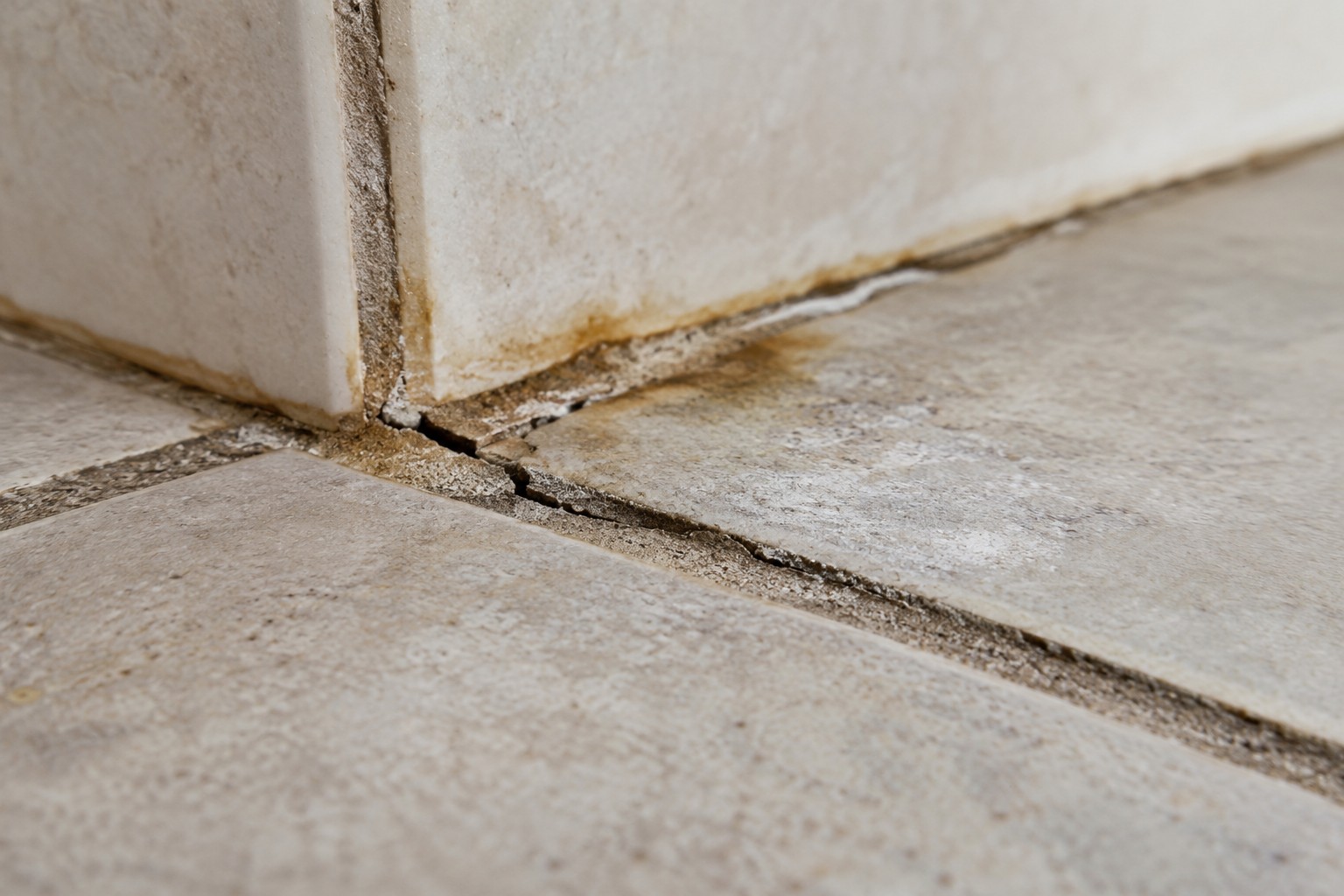
Urine runs along grout lines and into hairline cracks or tile edges. From there it's out of reach of a surface cleaner.
Old Pet Urine May Require Multiple Treatments
Old dog urine smell in tile grout rarely disappears in one pass. Plan on repeat treatments for deep contamination.
How to Get Dog Urine Smell Out of Tile and Grout, Step by Step
Removing dog urine smell from tile grout takes eight steps: locate, blot, clean, apply enzymes, dwell, scrub, rinse and dry, then repeat. Skipping the dwell time is the mistake I see most.
Step 1: Find the Full Urine-Affected Area
Check visible stains, corners, spots around toilets, wall edges, under furniture, and your dog's favorite spots. Use your nose first. A UV flashlight in a dark room can also show dried urine.
Step 2: Remove Any Fresh Urine
Blot with paper towels. Don't drag a wet mop across it, because that just spreads urine into more grout lines.
Step 3: Clean the Tile Surface
Wipe away dirt and residue with a mild cleaner so the odor treatment reaches the grout.
Step 4: Apply an Enzymatic Cleaner
Enzyme-based cleaners are designed to break down organic residue like urine. Follow the product label, and test a hidden spot first.
Step 5: Let the Cleaner Dwell
Wiping it off right away cuts the cleaner's working time. Keep the grout wet with product for the time the label gives.
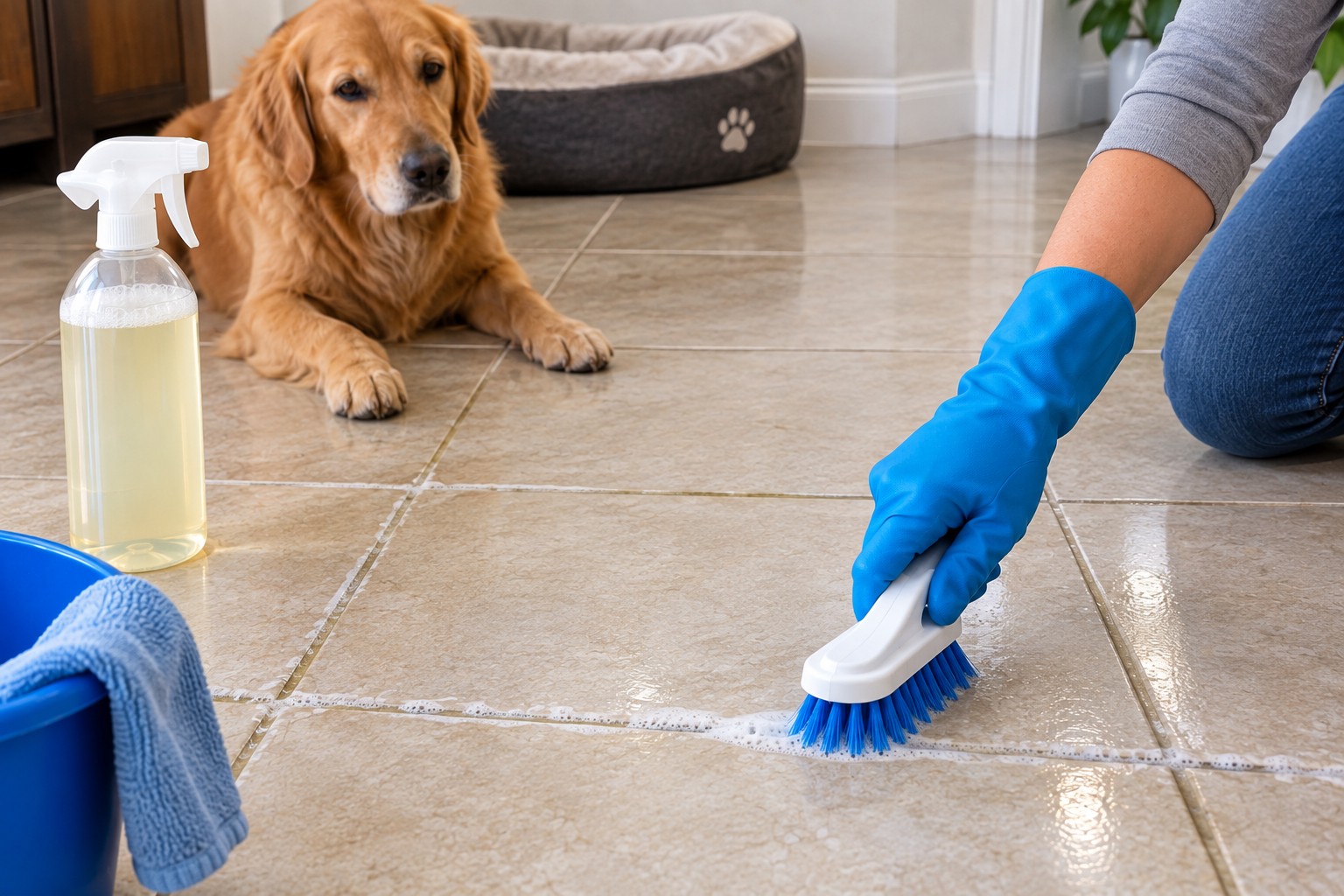
Step 6: Scrub the Grout Lines
Use a soft-to-medium nylon grout brush and work in small sections. Avoid steel bristles, which can scratch tile and wear grout.
Step 7: Rinse and Dry Thoroughly
Rinse as directed, then dry with towels and airflow. Leftover moisture makes it hard to tell whether the smell is gone or just masked.
Step 8: Repeat for Persistent Odor
Deep contamination often needs two or three treatments. Let the grout dry between rounds.
Best Cleaners for Dog Urine Smell in Tile Grout
Enzymatic cleaners are the best starting point for dog urine smell in tile grout, since they target the organic residue causing the odor. Other options help with specific problems.
| Cleaning Method | Best For | Advantages | Limitations |
|---|---|---|---|
| Enzymatic cleaner | Pet urine odor | Targets organic residue | Needs proper dwell time |
| Hydrogen peroxide-based cleaner | Odor and stains | Useful on some surfaces | Test first |
| Baking soda | Mild odor | Simple deodorizer | May not reach deep contamination |
| Oxygen bleach | Stained grout | Helps with discoloration | Check grout compatibility |
| Steam cleaning | Surface cleaning | Heat and moisture | Doesn't necessarily solve deep urine contamination |
| Vinegar | Some surface cleaning | Common household product | Not ideal for every tile or grout type |
No single product or chemical combination is safe for every surface. Check the label and test first.
How to Remove Dog Urine Smell From Grout Naturally
Baking soda, hydrogen peroxide, and white vinegar are the usual natural options for dog urine smell in grout, but natural doesn't mean safe for every surface.
Baking Soda
Sprinkle it on damp grout, let it sit, then scrub and rinse. It's good for mild odor, but it rarely solves deep contamination.
Hydrogen Peroxide
Some people use it on odor and stains. Test a small area first, since it can lighten some colored grout.
White Vinegar
Vinegar can freshen surfaces, but its acidity can harm some grout and stone.
Never mix cleaning chemicals. Bleach combined with acids like vinegar, or with ammonia-containing products, creates toxic gases. Use one product at a time and rinse between them.
How to Get Rid of Dog Urine Smell in Tile Grout Without Damaging It
Match the cleaner to your surface, because tile and grout types react differently to acids and harsh products.
| Surface | How It Handles Urine | Cleaning Caution |
|---|---|---|
| Ceramic tile | Glazed surface resists absorption | Mild cleaners are usually fine |
| Porcelain tile | Very low absorption | Focus treatment on the grout |
| Natural stone tile | Can absorb and etch | Avoid vinegar and acidic products; use stone-safe cleaners |
| Cement grout | Porous, absorbs urine | Needs enzyme treatment and dwell time |
| Epoxy grout | Highly resistant | Surface cleaning is often enough |
What If the Dog Urine Smell in Grout Keeps Coming Back?
If the dog urine smell in tile grout returns, the odor source is usually deeper than the surface. Common causes:
- Urine soaked deep into the grout
- Unsealed grout
- Cracks or tile edges where urine traveled
- Moisture or contamination under the tile
- A dog repeatedly using the same spot
- Odor coming from the subfloor
Can Dog Urine Damage Tile or Grout?
Dog urine can discolor grout and leave lasting odor, but serious damage is uncommon on glazed tile. Repeated moisture may deteriorate some grout materials, and natural stone can be sensitive, so clean accidents promptly.
How to Tell Whether Dog Urine Smell Is in the Grout or Under the Tile
If the smell is strongest along grout lines, it's in the grout. If it covers a large area or returns, it may be under the tile.
| Problem | Typical Cause | Cleaning Approach |
|---|---|---|
| Smell on tile | Surface residue | Surface cleaning |
| Smell in grout | Absorbed urine | Deep grout treatment |
| Smell at tile edges | Possible penetration | Inspect edges and cracks |
| Smell keeps returning | Deeper contamination or repeated accidents | Investigate the source |
Other signs of deeper trouble: odor that strengthens when the area gets damp, or cracked and missing grout.
Should You Seal Grout After Removing Dog Urine Smell?
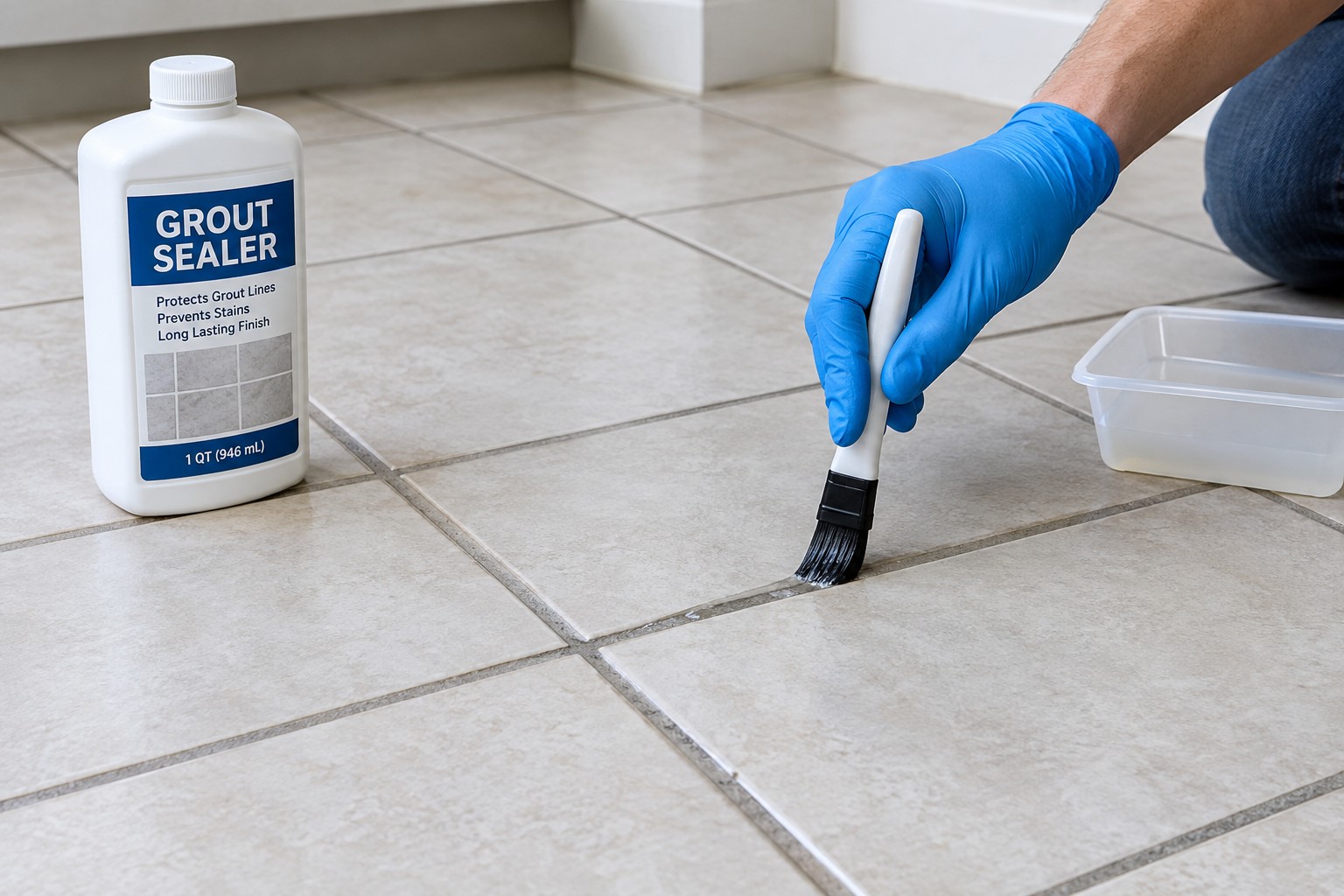
Yes, in most cases, but only after the grout is clean and completely dry. Sealing doesn't remove existing odor. It can help reduce future absorption in suitable grout. Follow the grout and sealer manufacturer's instructions. See my guide to the best grout sealer for options.
Common Mistakes When Cleaning Dog Urine Smell From Grout
Most failed attempts come down to a handful of avoidable mistakes.
- Only mopping the floor: it spreads urine and never reaches the grout.
- Using too much water: extra moisture pushes urine deeper.
- Scrubbing without treating the odor source: scrubbing alone won't break down residue.
- Using vinegar on sensitive surfaces: it can etch natural stone.
- Mixing cleaning products: some combinations release dangerous fumes.
- Sealing dirty or damp grout: it traps odor inside.
- Ignoring recurring accidents: the smell will keep coming back.
How to Prevent Dog Urine Smell in Grout
Prevent dog urine smell in grout by cleaning accidents fast and keeping grout dry and sealed.
- Clean accidents right away
- Keep a regular grout-cleaning routine
- Inspect and repair damaged grout
- Seal suitable grout
- Wash pet bedding and mats near the area
- Watch for repeat spots and address the cause with your vet or trainer
Frequently Asked Questions About Dog Urine Smell in Grout
How do you get dog urine smell out of grout?
Blot up urine, apply an enzymatic cleaner, let it dwell, scrub, rinse, and dry. Repeat if needed.
How do you get dog urine smell out of tile and grout?
Clean the tile surface first, then treat the grout lines with an enzymatic cleaner.
How do you get dog urine smell out of tile grout?
Use a nylon brush and enzyme cleaner on the grout, and allow full dwell time before rinsing.
Why does my grout still smell like dog urine after cleaning?
Urine has likely soaked deeper than the cleaner reached, or reached cracks or the subfloor.
Does baking soda remove dog urine smell from grout?
It helps with mild odor but may not remove deep contamination.
Does vinegar remove dog urine smell from grout?
It can freshen surfaces, but it isn't ideal for every tile or grout type, and it can harm natural stone.
Can hydrogen peroxide remove dog urine smell from grout?
Some people use it, but test a small area first and never mix it with other cleaners.
Will steam cleaning remove dog urine smell from grout?
It cleans the surface but doesn't necessarily fix deep urine contamination.
Can dog urine soak through grout?
Yes, especially unsealed or cracked grout, which can let urine reach the tile edges and below.
Should I seal grout after removing dog urine?
Yes, once it's clean and completely dry. Sealing won't remove existing odor.
Final Thoughts on Dog Urine Smell in Grout
Dog urine smell in grout usually needs more than a mop, because grout absorbs and holds urine residue. Clean the area thoroughly, use a compatible enzymatic pet-odor cleaner, allow dwell time, scrub, then rinse and dry. If the smell returns, look for deeper contamination under the tile.