
Published: October 1, 2026

By Jack Martin — Grout & Tile Cleaning Specialist, 10+ years testing grout cleaning methods, 500+ products personally tried.
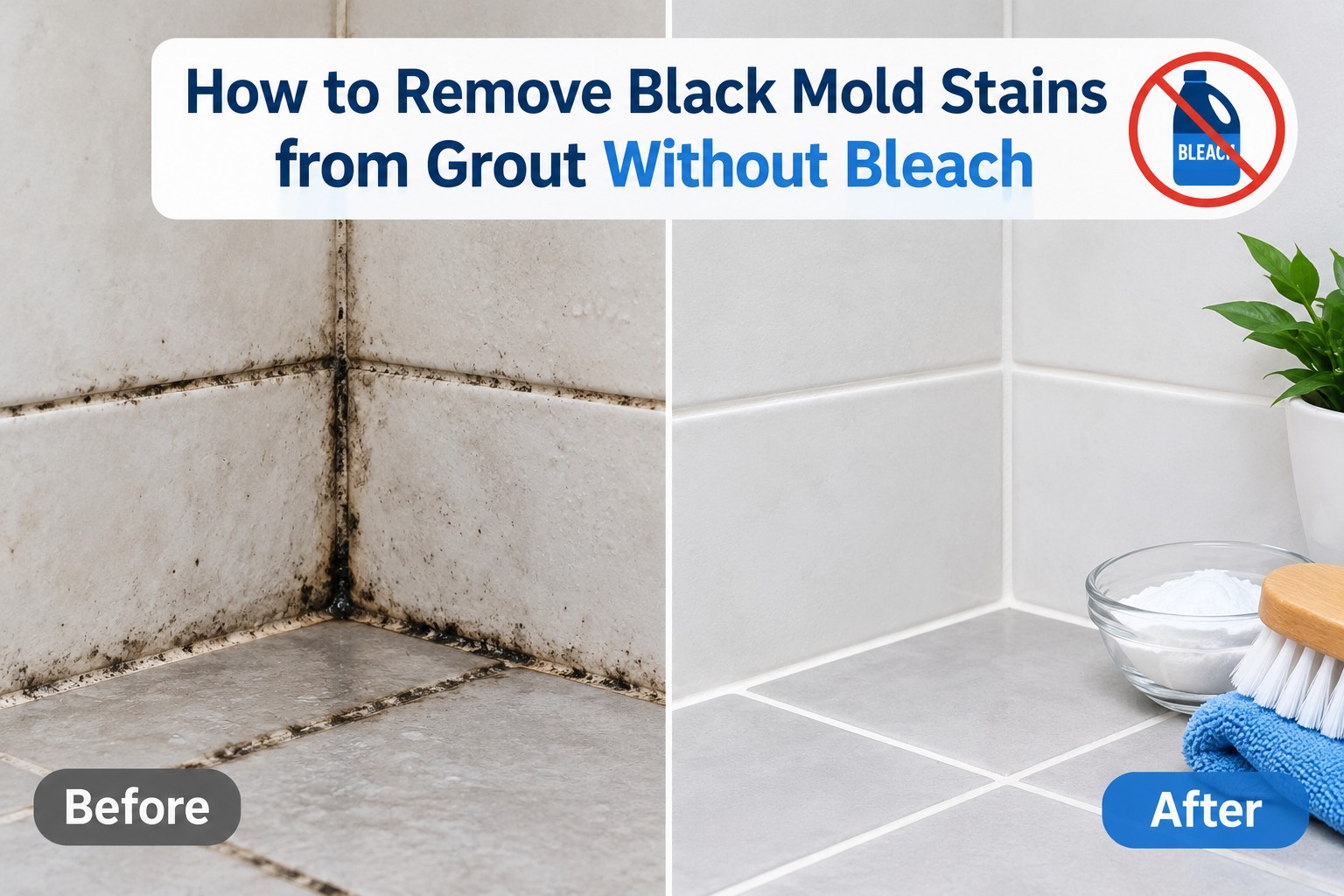
The safest bleach-free way to remove black mold stains from grout is a paste of 3% hydrogen peroxide and baking soda, left on for 10 to 15 minutes, scrubbed with a stiff nylon brush, then rinsed and dried. White vinegar, oxygen booster powder, tea tree oil, and steam are solid alternatives. Fixing the moisture problem afterward is what keeps the stains from returning.
Black mold stains from grout are almost always surface mildew feeding on soap film and trapped moisture, and most of them come out without any chlorine bleach. Dark lines in shower corners, tub surrounds, and backsplashes look alarming, but the cleanup uses ingredients already sitting in most kitchens.
Chlorine bleach is a weak first choice for porous grout. Bleach lightens the colour on the surface while the mold roots stay buried in the joint, so the dark spots usually reappear within a few weeks. The U.S. EPA also does not recommend bleach as a routine mold cleaner,.
Why Black Mold Stains from Grout Keep Coming Back
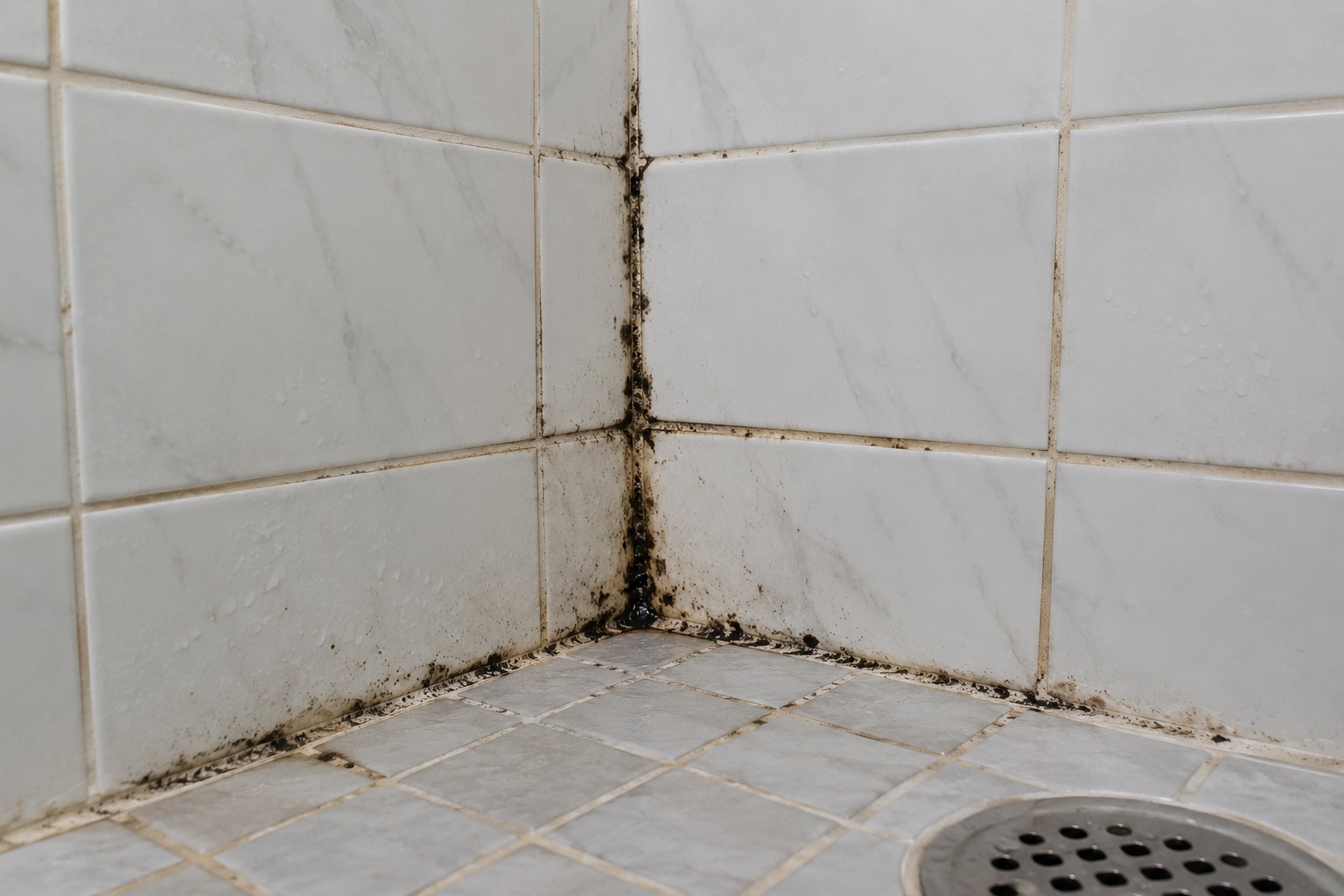
Black mold stains from grout return because cement-based grout absorbs water and stays damp for hours after every shower. Mold spores float through all indoor air, so they only need moisture, a food source like soap scum or skin oils, and a rough surface to settle on. Grout joints supply all three.
Surface cleaning removes the visible colony but not the conditions that created it. In my own bathrooms, the darkest growth always sits in the lowest corner of the shower floor, exactly where water pools longest.
Are Black Mold Stains Harmful to Your Health?
Black mold stains on grout can irritate the nose, throat, eyes, and skin, and they can aggravate asthma or allergies, but most bathroom grout stains come from common mildew species rather than rare toxic mold. Colour alone cannot identify a species, so every dark growth deserves removal.
Stachybotrys chartarum, the species behind the "toxic black mold" headlines, needs constantly soaked material like drywall paper and rarely grows on ceramic grout. People with asthma, weakened immune systems, infants, and older adults should avoid scrubbing mold themselves when possible. Anyone whose wheezing or congestion improves after leaving the house should speak with a doctor.
What You Need Before You Start
A short supply list and basic protection make mold removal faster and safer. Gather these before opening a single bottle:
- 3% hydrogen peroxide (standard drugstore bottle) and baking soda
- Plain white vinegar (5% acidity), oxygen booster powder, and tea tree oil
- A stiff nylon grout brush and an old toothbrush (never steel or wire, which scratches tile glaze)
- Two spray bottles, microfiber cloths, and a bucket of clean water
- Rubber gloves, safety goggles, and an N95 mask
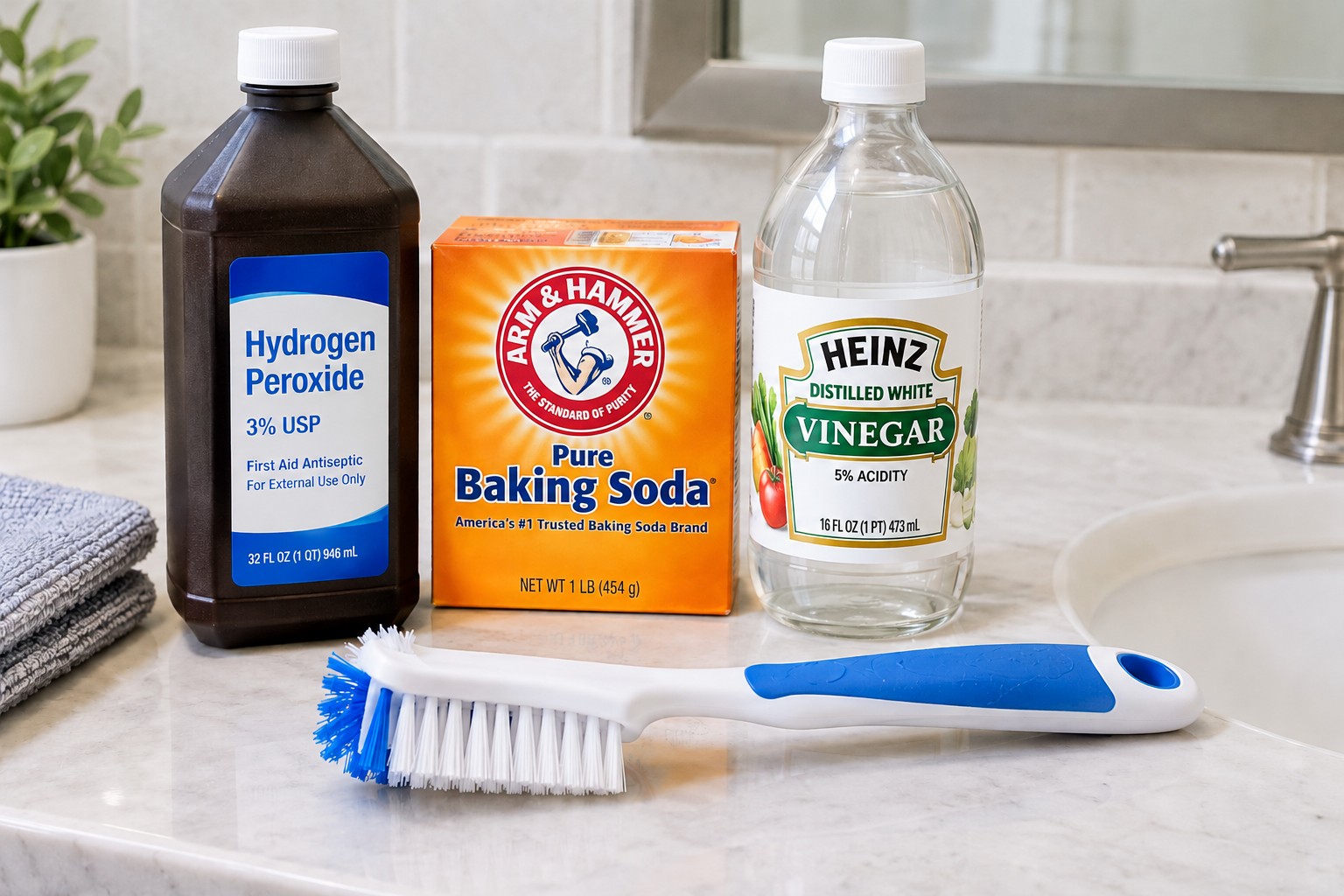
Good ventilation and strict product separation keep the job safe. Open a window or run the exhaust fan throughout, and never combine any of these products with chlorine bleach or ammonia, because the mixtures release dangerous gases.
How to Remove Black Mold Stains from Grout Without Bleach: 5 Methods
Five bleach-free methods handle nearly every case of black mold stains on grout, and the right one depends on stain depth and tile type. Shower-specific advice lives in my guide to removing mold from shower grout.
Method 1: Hydrogen Peroxide and Baking Soda Paste (Best Overall)
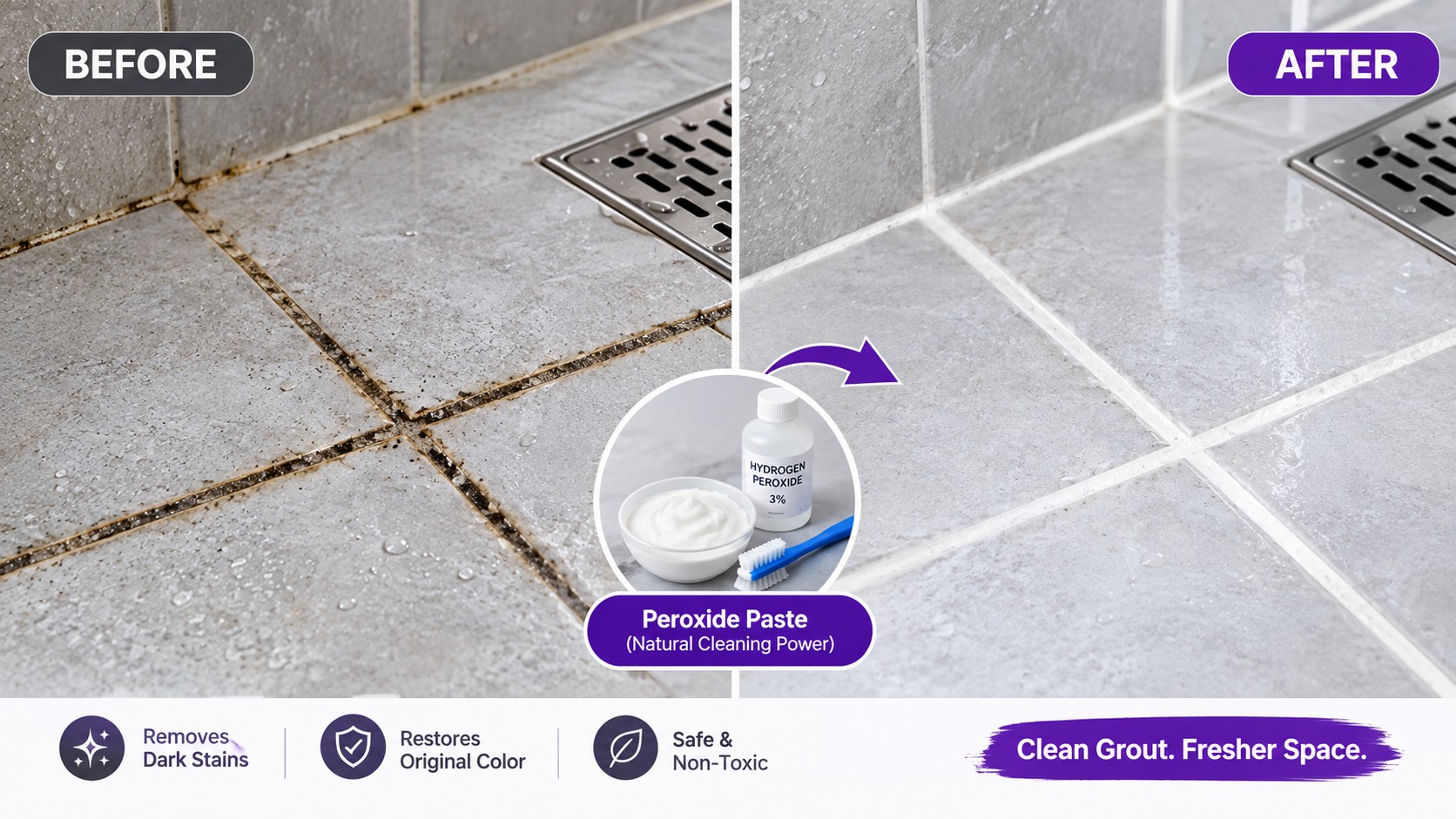
Hydrogen peroxide paste is the best bleach-free method for most black mold stains from grout, because the foaming oxygen lifts pigment out of porous joints while baking soda adds gentle scrubbing grit.
- Ventilate the room and put on gloves, goggles, and a mask.
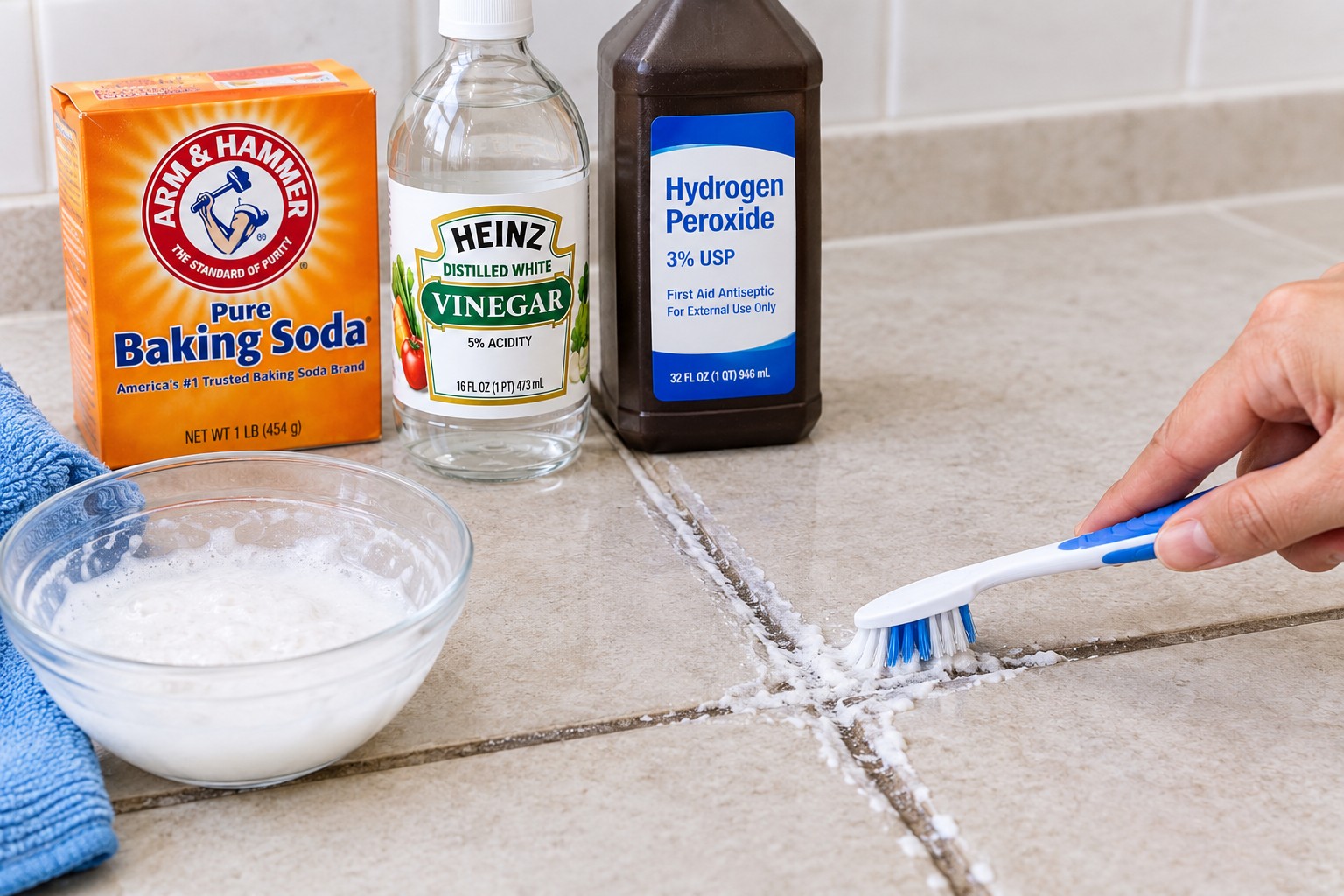
- Mix 3 tablespoons of baking soda with about 2 tablespoons of 3% hydrogen peroxide until the paste looks like toothpaste.
- Press the paste into the stained grout lines with an old toothbrush, about 1/8 inch thick.
- Wait 10 to 15 minutes while the paste fizzes and works.
- Scrub along each grout line with a stiff nylon brush using short strokes.
- Rinse with warm water and dry the area fully with a microfiber cloth.
Repeated use can lighten coloured grout, so test a hidden spot first.
Method 2: White Vinegar Spray
Undiluted white vinegar dissolves light mold growth and soap film on ceramic and porcelain grout after about one hour of contact. Spray the lines until wet, wait 60 minutes, scrub with a nylon brush, rinse with plain water, and dry.
Warning: Never use vinegar on marble, travertine, or limestone, because the acid etches natural stone. Frequent use can also weaken cement grout, so limit vinegar to about once a month. Never mix vinegar and hydrogen peroxide in one bottle, since the blend forms an irritating compound called peracetic acid.
Method 3: Oxygen Booster (Sodium Percarbonate)
Oxygen booster powder works well on deep black stains and larger areas because warm water activates it into hydrogen peroxide and washing soda. Despite the "oxygen bleach" label on some products, the powder contains no chlorine.
Oxygen booster needs hot water and 15 to 30 minutes of contact to work. Dissolve the powder following the label (a common ratio is 1 tablespoon per cup), brush it onto the grout, then scrub, rinse thoroughly, and dry. Wear gloves, since the solution irritates skin.
Method 4: Tea Tree Oil Spray
Tea tree oil slows mold regrowth on lightly stained grout, though it clears dark stains more slowly than peroxide. Mix 1 teaspoon of oil into 1 cup of water in a spray bottle, shake well, and spray the grout.
Tea tree solution should stay on the grout without rinsing. Tea tree oil is toxic to cats and dogs, so keep pets out of the room until the surface dries. This method suits upkeep better than heavy cleanup.
Method 5: Steam Cleaning
A steam cleaner removes surface mold and loosens grime from grout lines using heat alone, with zero chemicals. Fit the narrow nozzle, pass slowly along each line two or three times, and wipe the loosened residue immediately with a microfiber cloth.
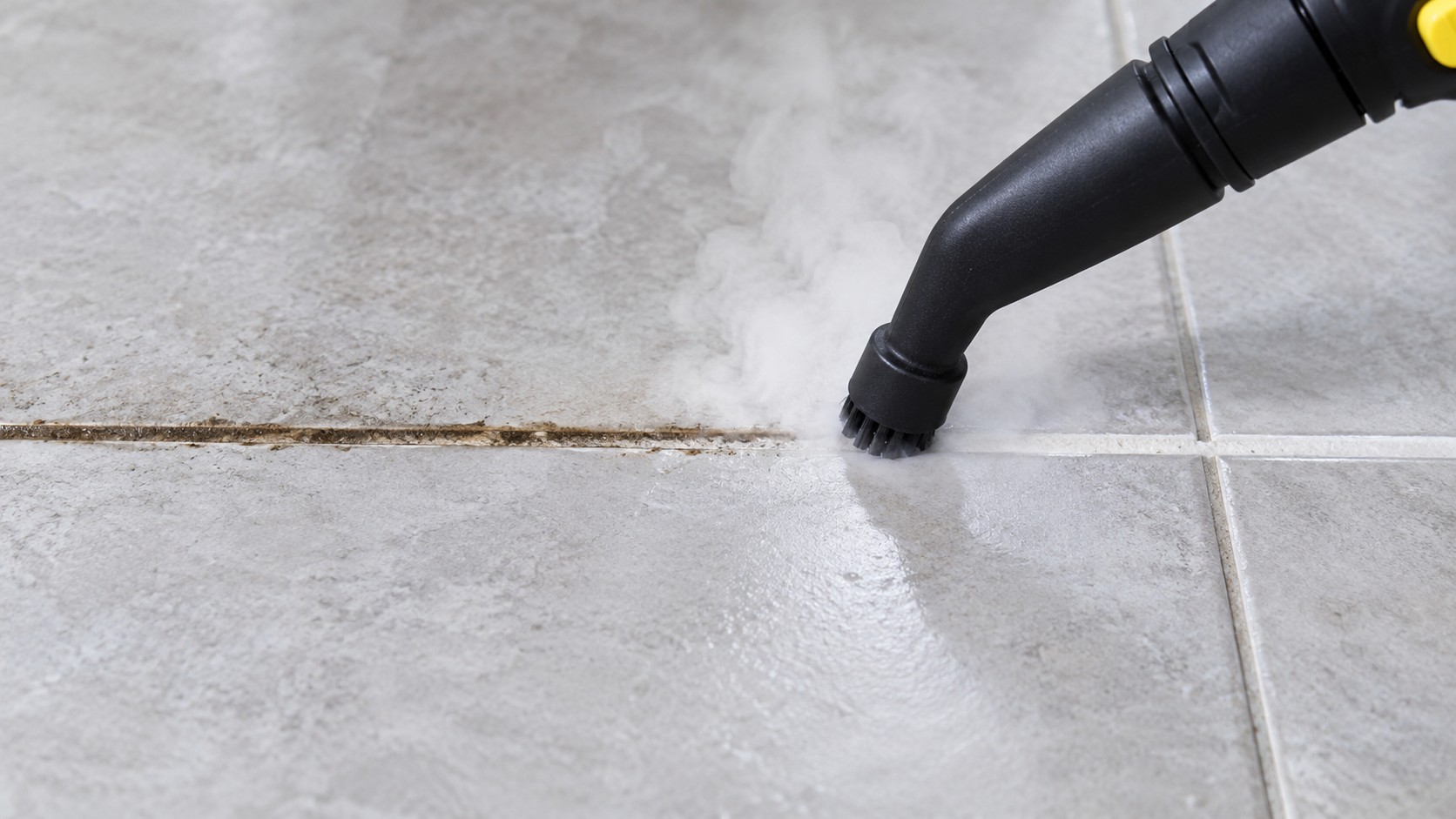
Steam is unsafe on cracked grout, loose tiles, and unsealed natural stone, because pressurized steam can force water behind the tile. My full buying and technique breakdown is in the steam tile grout cleaner guide.
Which Bleach-Free Method Works Best?
The best bleach-free grout mold remover depends on stain depth, tile material, and cleanup time. The table below compares the five methods for removing black mold stains on grout side by side.
| Method | Best for | Wait time | Natural stone safe? | Main caution |
|---|---|---|---|---|
| Peroxide + baking soda | Dark, set-in stains | 10–15 min | Test first | May lighten coloured grout |
| White vinegar | Light stains, soap film | 60 min | No | Etches stone, weakens grout |
| Oxygen booster | Deep stains, big areas | 15–30 min | Test first | Irritates bare skin |
| Tea tree oil | Prevention, light spots | No rinse | Yes | Toxic to pets |
| Steam | Chemical-free upkeep | Instant | Sealed only | Can push water into cracks |
In short: hydrogen peroxide and baking soda wins for most homes, oxygen booster handles stubborn jobs, and vinegar, tea tree oil, and steam suit lighter stains and routine upkeep.
Common Mistakes That Make Mold Stains Worse
Using wire brushes, mixing cleaners, and leaving grout wet are the three mistakes that turn a quick cleanup into a recurring problem.
- Scrubbing with steel or wire brushes. Metal bristles scratch grout and glaze, and the rough surface traps more mold next time.
- Mixing products. Bleach with ammonia or vinegar releases toxic gas, and vinegar with peroxide forms an irritant. Use one product at a time and rinse between them.
- Skipping the dry-down. Damp grout restarts growth within days, so towel the lines dry after rinsing.
- Sealing over mold. Sealer applied to stained or damp grout locks the problem in place.
How to Keep Black Mold Stains from Returning
Controlling moisture is the single most effective way to stop mold from coming back on grout. Run the exhaust fan for 20 to 30 minutes after every shower, squeegee wet walls, and keep indoor humidity between 30% and 50%, the range the EPA recommends.
Sealed grout resists water and stains far longer than unsealed grout. Once the grout is completely dry, usually 24 hours after cleaning, apply a quality penetrating sealer and repeat every one to two years. My walkthrough on how to seal grout covers the process step by step.
When to Call a Professional or Regrout
Professional help is the right call when mold covers more than about 10 square feet, returns within two weeks of cleaning, or sits behind crumbling grout. Recurring growth often points to a hidden leak, failed caulk, or wet backing material that no surface cleaner can reach.
Soft, crumbling, or cracked grout should be removed and replaced, because damaged joints hold moisture permanently. In those cases, a tile contractor or mold remediation specialist saves money compared with repeating failed cleanups.
Final Thoughts on Removing Black Mold Stains from Grout
Removing black mold stains from grout without bleach is realistic for most households, and the process takes under an hour with the right method. Start with hydrogen peroxide paste, protect yourself, and dry the area fully afterward.
A gentle cleaner paired with a consistent drying routine beats any single product. After 10+ years of testing grout cleaners, that combination always gave me the longest-lasting results. For more recipes, see my homemade grout cleaner guide.
Frequently Asked Questions
What removes black mold stains from grout without bleach?
A paste of 3% hydrogen peroxide and baking soda removes most black mold stains from grout without bleach. Apply it for 10 to 15 minutes, scrub with a nylon brush, rinse, and dry. White vinegar, oxygen booster, and steam also work.
Does vinegar kill black mold on grout?
White vinegar kills and dissolves many surface molds on ceramic grout after about an hour of contact. Vinegar should never go on natural stone, and it will not remove deep stains as well as peroxide.
Can hydrogen peroxide remove black mold stains from grout permanently?
Hydrogen peroxide removes the visible stain and surface colony, but results are only permanent if moisture is controlled. Stains return when grout stays damp, so ventilation and sealing matter as much as the cleaner.
Are black mold stains on grout dangerous to breathe?
Black mold stains on grout can irritate airways and worsen asthma or allergies, particularly in sensitive people. Most bathroom growth is common mildew, though anyone with ongoing symptoms should see a doctor.
Why do black mold stains from grout return after cleaning?
Black mold stains from grout return because porous grout stays wet, and leftover soap residue feeds new growth. Dry the grout after showers, run the fan, and seal the joints to break the cycle.
Is baking soda alone enough to clean black mold on grout?
Baking soda alone cleans light mildew but struggles with dark, set-in stains. Adding hydrogen peroxide gives the paste the oxidizing power needed to lift deeper discolouration.
How long should a cleaner sit on moldy grout?
Most cleaners need 10 to 15 minutes for peroxide paste, 15 to 30 minutes for oxygen booster, and about 60 minutes for vinegar. Never let any paste dry completely on the grout.
Should grout be sealed after removing black mold?
Grout should be sealed after mold removal, once the joints are completely dry. A penetrating sealer slows water absorption, which is the main driver of regrowth.