

By Jack Martin — Grout & Tile Cleaning Specialist, 10+ years testing grout methods, 500+ products personally tested.
Quick Answer
For almost every glass tile job, I reach for unsanded epoxy grout (MAPEI Keracolor U or Litokol Starlike are my go-tos) — it's non-abrasive, waterproof, and never needs sealing. Save sanded grout for joints wider than 1/8" and only after the tile manufacturer confirms it's scratch-safe. For iridescent or art-glass mosaics, a translucent grout with glass microbeads lets the tile's own color do the talking instead of a hard grout line.
Grout for glass tile is not a place to grab whatever bag is left over from your last ceramic job. I've installed and re-grouted enough glass backsplashes, showers, and mosaic accent walls to know the grout decides whether the finished wall looks expensive or looks like a mistake. Pick the wrong product and you get scratches, dull haze, or grout that stains within a year. This guide walks through exactly how I pick grout for glass tile on every job, joint by joint, so the install looks sharp and stays that way.
Why Glass Tile Needs Its Own Grout Rules
Glass tile behaves nothing like ceramic or porcelain once grout enters the picture. Glass is non-porous, glossy, and softer on the surface than most people expect, which means it scratches easily and shows every flaw in the joint work. A grout built for glass has to stay low-abrasion, resist chemical dulling, and seal tight enough to keep moisture from working its way behind the tile. If you're still getting familiar with grout basics before narrowing down to a glass-specific product, my guide to grout types and their advantages covers that groundwork first.
Standard cement grout meant for ceramic doesn't account for any of that softness. I've watched sanded cement leave faint scuff marks across an entire glass mosaic wall simply because the installer treated it like any other tile job. Getting the grout choice right on day one saves a tear-out later.
What the Right Grout Actually Does for You
Using the correct grout for glass tile changes three things at once: the tile keeps its shine instead of dulling, the joints resist mold and staining instead of collecting grime, and cleanup turns into a five-minute wipe-down instead of a scrubbing session. That's the entire payoff — better looks, less upkeep, longer life out of the installation.
Types of Grout for Glass Tile
There are three grout families worth knowing, and choosing between them answers the question I get asked constantly: what type of grout for glass tile should I actually buy?
Epoxy: My Go-To Choice for Glass Installs
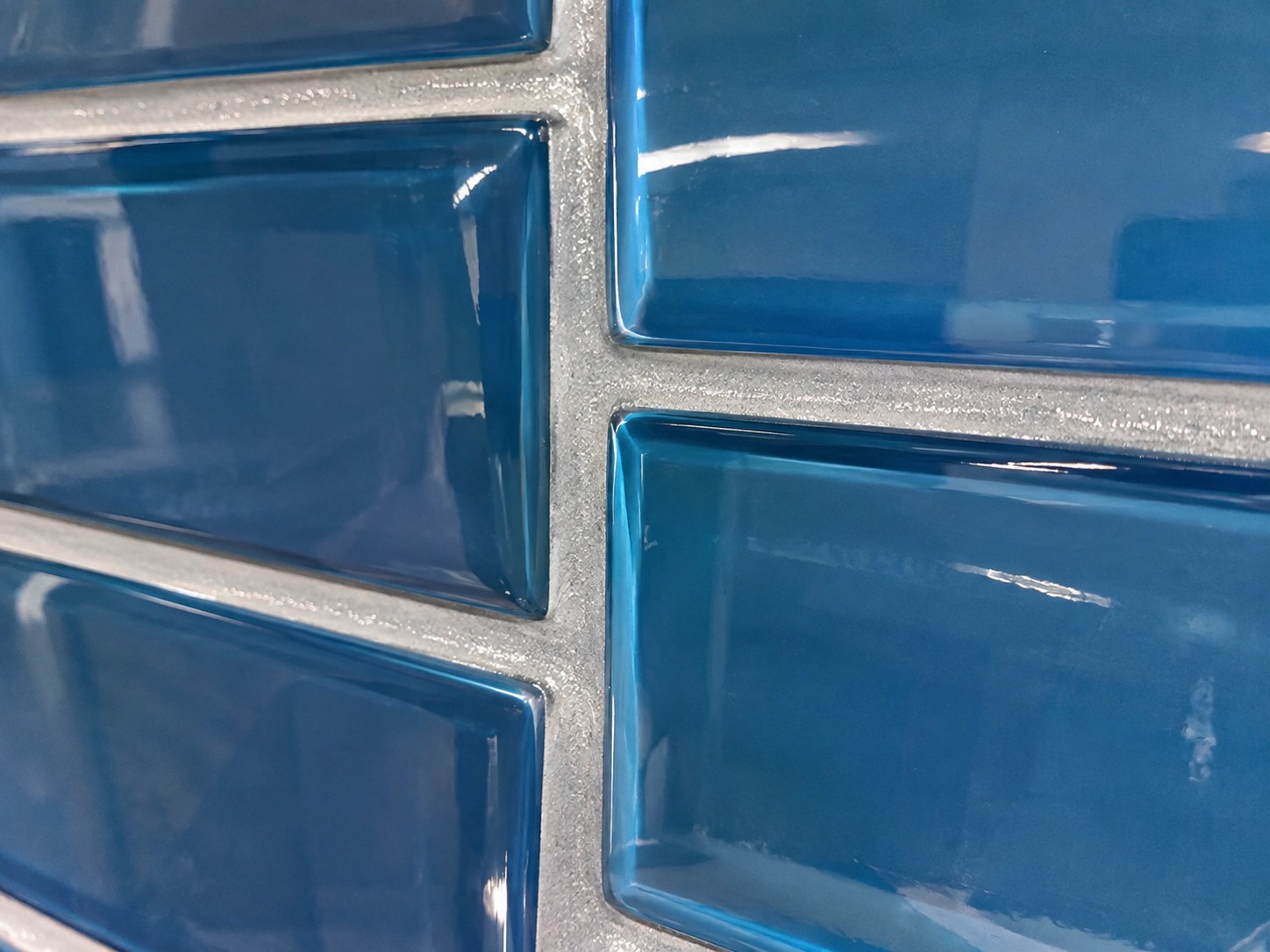
Epoxy is my default for nearly every glass tile job — backsplashes, tub surrounds, full shower walls. It's built from resin and hardener rather than cement, which makes it essentially waterproof straight out of the bucket. It resists staining from oil, wine, and hard water, and once cured it never needs sealing. MAPEI Keracolor U (unsanded) and Litokol Starlike are the two brands I reach for most, and both have a solid track record on glossy glass without scratching. The trade-off is that epoxy sets faster than cement-based grout, so I mix small batches and clean as I go instead of grouting a whole wall before wiping down.
Sanded Grout: Proceed With Caution
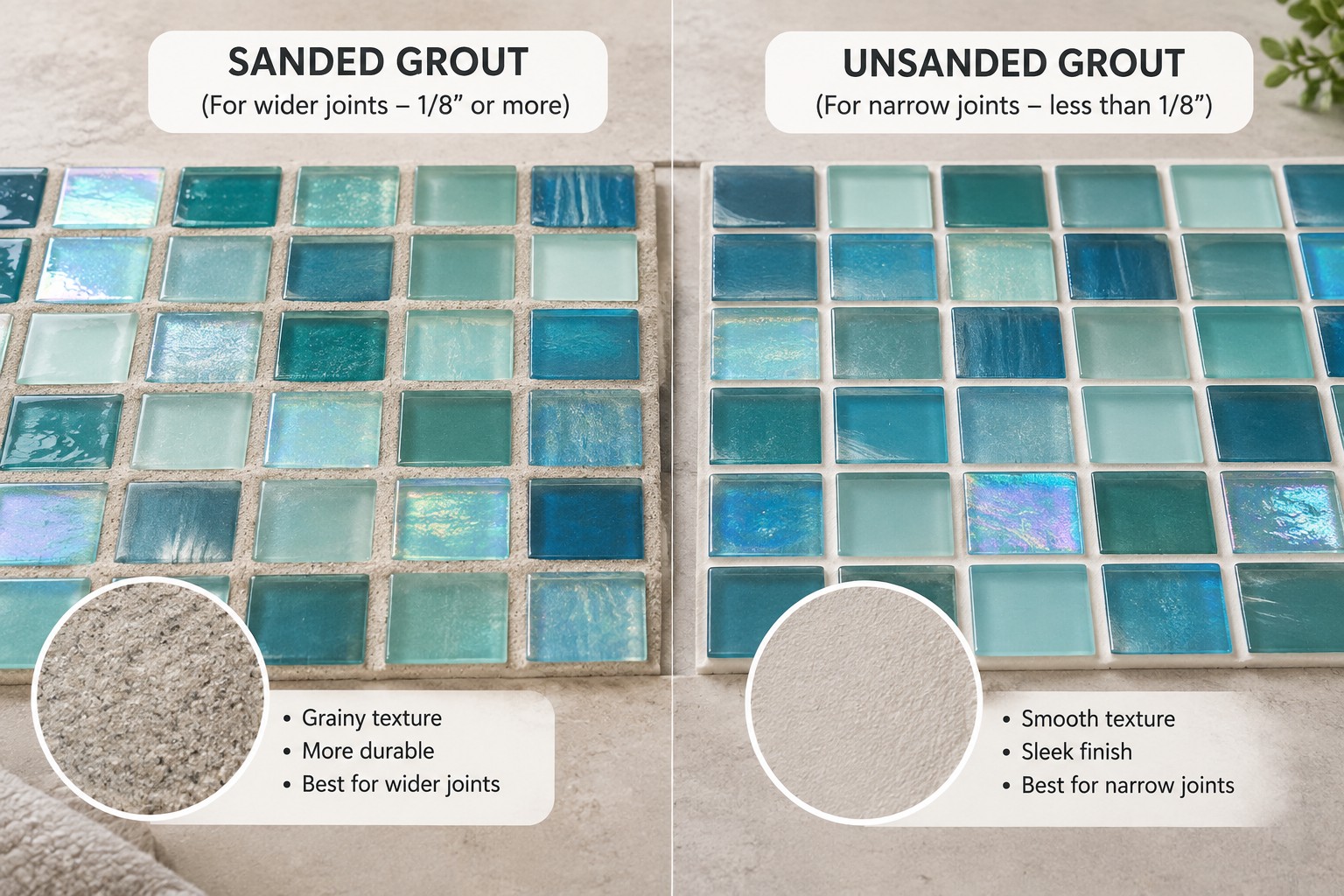
Sanded grout for glass tile is where I tell people to slow down. The sand particles that give this grout its strength on wider joints can act like fine sandpaper against a glossy glass surface, leaving scratches that won't buff out. I only use sanded grout on glass when the manufacturer explicitly rates it safe, or when joints run wider than 1/8" and need the extra structural bite sand provides. Even then, I grout a small test panel first and check for scratching before touching the full wall — a five-minute step that has saved more than one job.
Unsanded Grout: The Safer Default
Unsanded grout for glass tile is the safer default for most installs, and it's what I hand-pick whenever joints stay under 1/8". Without sand in the mix, there's nothing to drag across the glass face during application or cleanup, so the surface comes out smooth and scratch-free. Cement-based unsanded grout is the budget option here — it costs less than epoxy but needs sealing and can pick up staining over a few years, which is why I still lean epoxy for anything that sees regular moisture.
Clear Grout: Letting the Tile Lead
Clear grout for glass tile is a newer product I've started recommending for iridescent or art-glass mosaics, where any visible grout line competes with the tile's own color. Instead of filling joints with solid pigment, clear grout cures translucent, letting light pass through and blend with the glass. Premium lines like Litokol's Starlike Crystal mix in tiny glass microbeads that catch and reflect light rather than just disappearing — a step up from a plain clear resin. It's not a fit for every job; on an uneven or dark substrate it can look inconsistent. But on the right mosaic sheet, it makes the wall read as one continuous surface instead of a grid.
Grout for Mosaic Glass Sheets
Mosaic sheets bring tight joints, dozens of small tiles, and mesh backing that traps residue if you're not careful with cleanup. For grout for glass mosaic tile, I default to unsanded epoxy nearly every time — the narrow 1/16" to 1/8" joints typical on mosaic sheets fall right into unsanded territory, and stain resistance matters more here since mosaic backsplashes usually sit right in the splash zone above a sink or stove.
How to Choose the Best Grout for Glass Tiles
A handful of practical factors decide this for me on every single job.
Joint Width
Narrow joints under 1/8" call for unsanded or epoxy grout every time. Wider joints may tolerate sanded grout, but only after the tile manufacturer confirms it's rated safe for that specific glass.
Where the Tile Is Going
A kitchen backsplash takes on grease and heat, while a shower wall stays under constant moisture. Epoxy handles both better than cement-based grout because it doesn't absorb whatever lands on it.
Light and Reflection
Glass bounces light differently than ceramic, so any unevenness in the grout line becomes more obvious once the wall is finished. I always cure a small test batch on a spare tile before committing to the full installation.
Installing Glass Tile Grout: Step by Step
- Prep the surface. Clean, dry, and dust-free before you mix anything. Budgeting the job first? My grout cleaning cost calculator can help estimate materials.
- Mix carefully. For epoxy, follow the resin-to-hardener ratio exactly — it won't cure correctly otherwise.
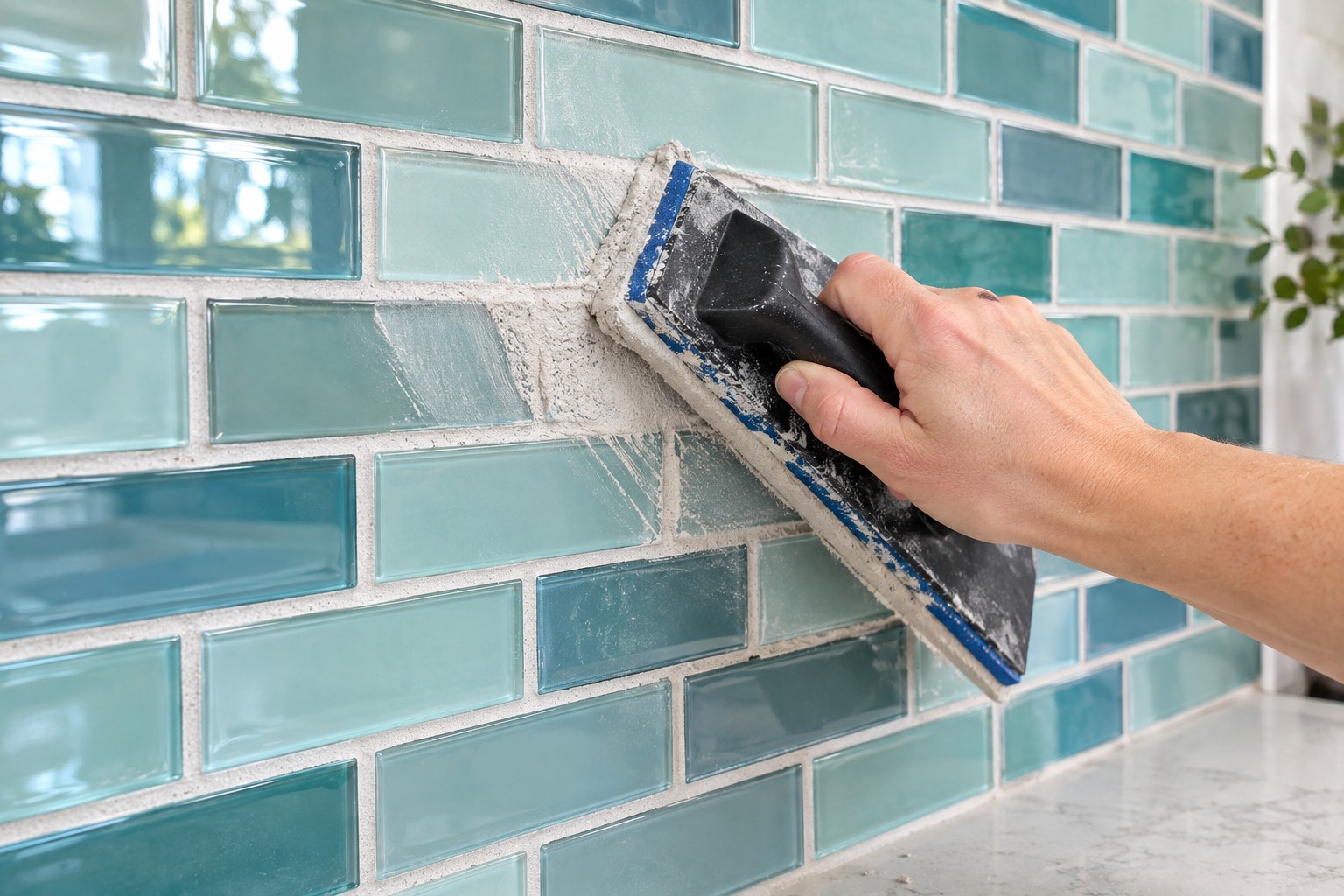
- Float at an angle. I hold the float at roughly 45° and work diagonally across the joints so I don't drag grout back out of the gaps.
- Clean early and often. Wipe excess with a damp sponge every few minutes, especially with epoxy, which hazes fast if left to sit.
- Let it cure fully. Resist running water over fresh grout before the manufacturer's cure time is up.
Comparison Table: Grout Types for Glass Tile
Every grout type below trades off differently between scratch safety, moisture resistance, and price — here's how I rate them after using each one on real glass tile installs.
| Grout Type | Best For | Pros | Cons | My Rating |
|---|---|---|---|---|
| Epoxy (unsanded) | Backsplashes, showers, mosaics | Stain-proof, waterproof, no sealing needed | Pricier, shorter working time | 9.5/10 |
| Unsanded cement | Joints under 1/8" on low-moisture walls | Budget-friendly, easy to work with | Needs sealing, can stain over time | 7/10 |
| Sanded cement | Joints 1/8"+ (manufacturer-rated glass only) | Strong hold on wider joints | Can scratch glass; needs a test panel first | 4/10 |
| Clear / translucent (glass-bead) | Iridescent or art-glass mosaics | Lets tile color show through, catches light | Premium price, limited brand options | 8.5/10 |
In short: unsanded epoxy is the safest all-around pick for glass tile, sanded cement is the one to approach with caution, and clear grout is a design call reserved for mosaics where you want the glass to lead.
Common Mistakes to Avoid With Glass Tile Grout
Most glass tile grout failures I get called out to fix trace back to one of these same five mistakes.
- Grabbing sanded grout by default. It's the most common mistake I see — sanded is fine on ceramic, but it's a scratch risk on glass unless the manufacturer says otherwise.
- Grouting a full wall in one pass with epoxy. Epoxy sets faster than cement-based grout, and a full wall left too long before wiping causes a stubborn haze.
- Skipping the test panel. Color, texture, and scratch behavior all look different on a spare tile than they do once cured across an entire wall.
- Sealing epoxy grout out of habit. Epoxy doesn't need sealer — it's already non-porous — and adding one just wastes product and can leave a cloudy film.
- Using acidic cleaners on cement-based grout. Vinegar and other acidic solutions wear down cement grout over time, even though they seem gentle.
Maintenance and Cleaning of Glass Tile Grout
Even the best grout needs upkeep to keep glass tile looking new. I clean glass tile grout with a pH-neutral cleaner and a soft cloth — nothing abrasive, ever, since a scouring pad will dull glass faster than almost anything else in the house. If you'd rather mix something at home, my baking soda grout cleaner recipe works fine on cement-based grout around glass tile, though I skip it on epoxy since epoxy doesn't need that kind of scrubbing in the first place. For glass tile in a shower, my steam cleaning guide for shower grout is a good low-chemical option too. If you went with cement grout instead of epoxy, plan on resealing every couple of years — my grout sealer roundup breaks down which sealers hold up best.
When to Call a Pro
Call in a professional installer when the job involves large-format glass panels, a curved or non-standard substrate, or any wall where a failed grout job means retiling an expensive glass mosaic from scratch. I still recommend DIY-ing straightforward glass subway tile backsplashes with narrow joints — the margin for error is small but manageable. Where I draw the line personally is on steam showers and heated floors under glass tile, since substrate movement there needs an installer who can match grout flexibility to the assembly.
Grout Color and Design for Glass Tile
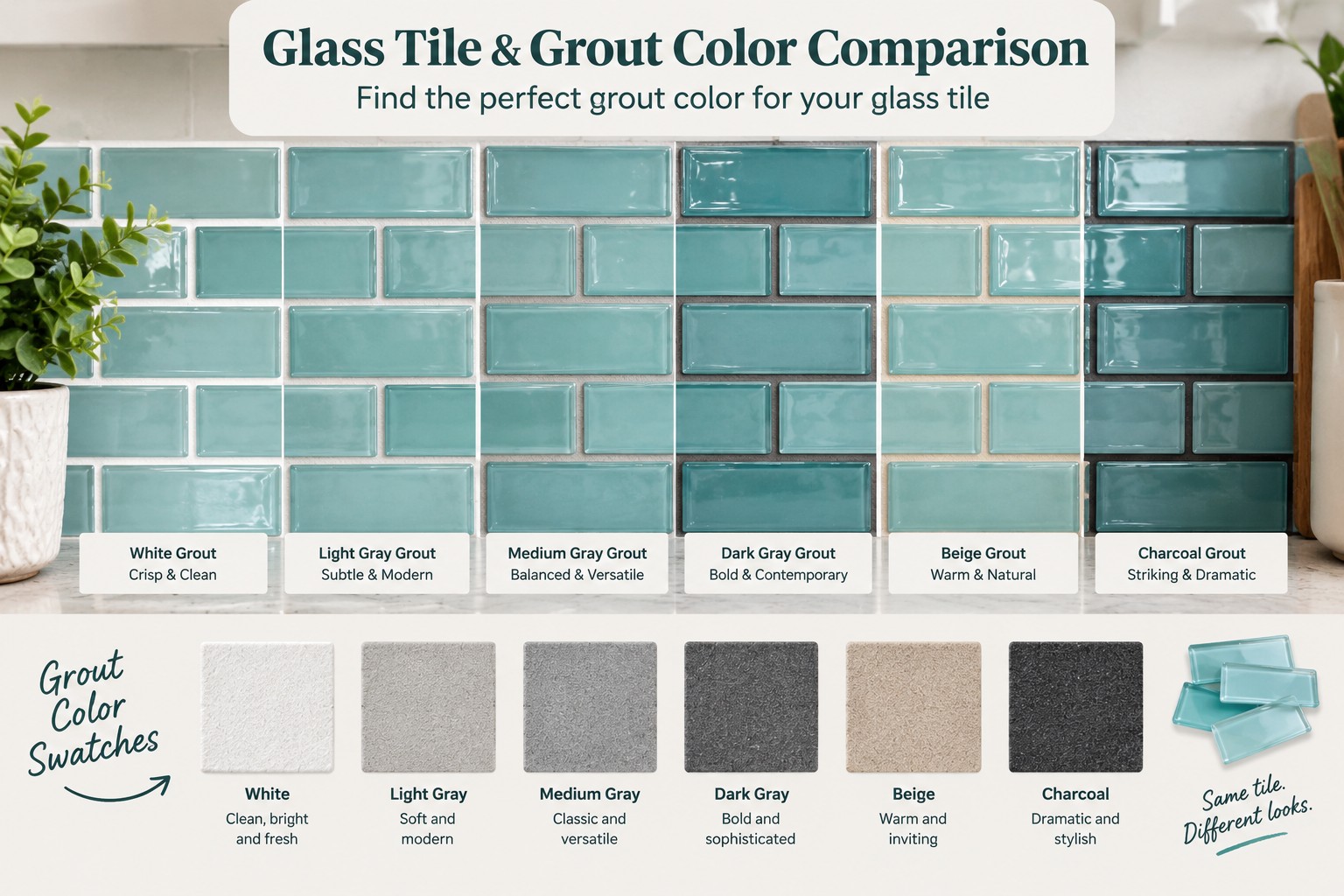
Color decisions change the entire feel of a glass tile installation, which is why how to pick grout color for glass tile is worth slowing down for. A grout shade close to your tile color blends individual pieces together, which works especially well on small-format glass mosaics. A contrasting grout color highlights the pattern and layout instead — I use this most often on subway and herringbone glass installs. My process stays simple either way: cure a small test batch next to the actual tile under the room's real lighting before ordering a full bag, since glass reflects light so differently from ceramic that a shade which looks right on a swatch card can shift once it's on the wall.
What Size Grout Line for Glass Subway Tile
For standard 3x6 glass subway tile, I run 1/16" grout lines by default — tight enough to keep the classic subway look, wide enough to absorb minor dimensional variance in the tile. If the tile has visibly uneven edges or a handmade, rippled finish, I bump that up to 1/8" to avoid fighting lippage during install.
Final Thoughts
Choosing grout for glass tile comes down to matching the product to the job: epoxy for most wet or high-traffic areas, unsanded cement for tight budgets on low-moisture walls, and clear or colored grout depending on the design effect you're after. Get the type, joint size, and color right, and a glass tile installation looks sharp for years with almost no maintenance headaches. For a broader look at grout cleaning across tile types, check my tile grout cleaner guide.
Frequently Asked Questions
What type of grout for glass tile works best overall?
Unsanded epoxy grout is what I recommend for the vast majority of glass tile installations. It won't scratch the glass surface during application, it's completely non-porous so it resists oil, grease, and hard water stains, and it never needs sealing the way cement-based grout does. MAPEI Keracolor U and Litokol Starlike have both held up well on glossy glass in my own installs, with no scratching or discoloration even years later. The only time I'd steer away from epoxy is on a very tight budget for a low-moisture wall, where quality unsanded cement grout can still get the job done.
Can I use sanded grout for glass tile mosaics?
Generally, no — not unless the tile manufacturer has explicitly rated it safe for that specific glass product. The sand particles are abrasive enough to leave fine scratches on a glossy or polished glass surface during both the float application and later grout haze cleanup. If you have a textured or matte-finish glass mosaic that the manufacturer confirms is compatible, I still grout a small test panel first and check closely for scratching before committing to the full wall.
Is clear grout for glass tile a good idea?
It can be a great choice, but it's a design decision more than a default one. Clear or translucent grout works especially well on iridescent or hand-cut art-glass mosaics where you want the tile's own color to take center stage instead of competing with a visible grout line. Where it falls short is on uneven or dark substrates, since you're essentially seeing through to whatever sits underneath — so I only recommend it when you control a consistent, light-colored backing.
How do I choose grout color for glass tile?
Start by deciding between a seamless look or a defined, patterned look. A grout shade that closely matches your tile blends individual pieces into one continuous surface, which works beautifully on small-format or monochrome glass mosaics. A contrasting color makes each tile pop and gives layouts like subway or herringbone more structure. Whichever direction you pick, cure a small test batch next to the actual tile under real room lighting before ordering a full bag.
What size grout line should I use for glass subway tile?
I run 1/16" grout lines on standard 3x6 glass subway tile by default. That's tight enough to keep the classic subway look while still absorbing minor dimensional variance between individual tiles. If the tile has a handmade or rippled finish with visibly uneven edges, I bump the joint up to 1/8" so I'm not fighting lippage during installation.
Does glass tile grout need to be sealed?
Epoxy grout never needs sealing — it's non-porous straight out of the bucket, which is one of the main reasons I recommend it for glass tile. Cement-based grout, sanded or unsanded, does need sealing, typically resealed every couple of years depending on how much moisture and traffic the area sees.
Can I clean glass tile grout with vinegar?
Occasionally, on stubborn spots, but I don't make it a habit. Vinegar's acidity can wear down cement-based grout over time even though it feels like a mild, natural cleaner. A pH-neutral cleaner and soft cloth is what I use for regular upkeep, saving vinegar for the rare tough stain on cement grout only — never on natural stone accents nearby.
How long does epoxy grout take to cure on glass tile?
Most epoxy grouts reach a light-use cure within 24 hours and a full cure around 7 days, though I always check the specific product's data sheet since working and cure times vary by brand. I avoid running water over the joints or exposing them to heavy moisture until that full cure window has passed, even if the surface looks and feels set sooner.