


By Jack Martin — Grout & Tile Cleaning Specialist, 10+ years testing grout cleaning methods, 500+ products tested since 2020.
Quick Answer
Yes — black mold on grout can be dangerous, especially with prolonged exposure. It thrives in damp, porous grout lines and can trigger respiratory irritation, allergic reactions, and worse for people with asthma or weakened immune systems. Small patches can usually be removed safely with an oxygen bleach or borax solution; large, spreading, or recurring infestations are a sign of a moisture problem behind the tile and may need professional attention.
If you've spotted dark, almost black speckling creeping along your grout lines, you're not imagining it — and you're definitely not alone. Black mold on grout is one of the most common bathroom problems I hear about, and in my years testing cleaning methods and talking to homeowners, it's also one of the most misunderstood. Some people panic and assume they need to gut the bathroom. Others wipe it once with a wet cloth and move on, not realizing it'll be back within weeks.
Here's what I want to walk you through: what this black growth actually is, whether it's something to genuinely worry about, how it compares to regular mildew and dirt, the best ways to remove it, and — just as important — how to stop it from coming straight back.
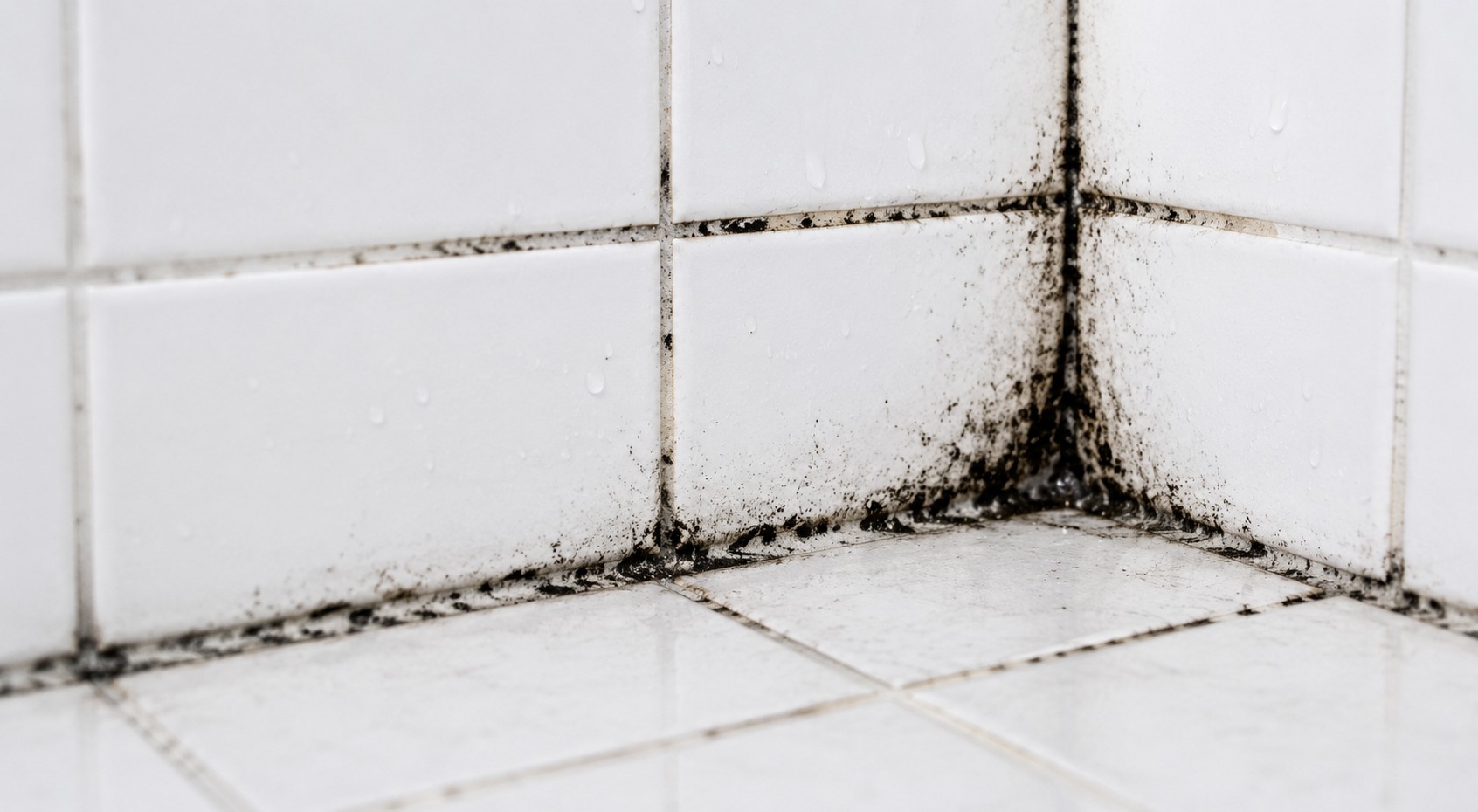
Black mold typically clusters in corners and low points where water sits longest.
Why Does Black Mold Grow on Grout?
Grout is porous by nature — that's actually part of its job, letting tiles shift slightly without cracking under pressure or temperature change. But that same porous structure is exactly what makes it such a welcoming home for mold. Combine that with the daily conditions inside a typical bathroom, and you've got a near-perfect breeding ground. In my experience, it almost always comes down to one or more of these four factors.
1. Constant, Trapped Moisture
Showers and baths leave grout wet multiple times a day, and if the room doesn't dry out fully between uses, that moisture just sits in the grout's pores. Mold doesn't need much — a persistently damp surface is often all it takes to get established, especially in a room that's used every morning and again every evening.
2. Poor Ventilation
A bathroom with no exhaust fan, or one that's switched off the moment the shower ends, traps humidity in the air far longer than it needs to be there. That lingering humidity settles right back onto the tile and grout, undoing any drying that happened during the day.
3. Soap Scum and Body Oils
Mold needs organic material to feed on, and soap residue, body oils, and shampoo runoff all settle into grout lines over time. It's part of why grout in a well-used family bathroom tends to get moldy faster than grout in a guest bathroom that barely gets used.
4. Aging, Cracked, or Unsealed Grout
Sealed grout resists water absorption significantly better than bare grout. If your grout has never been sealed, or the sealer has worn off (which typically happens after 12–18 months in a wet area), water soaks straight in rather than beading and running off. Cracked grout is even worse, since it gives water a direct path to travel behind the tile entirely, where mold can grow completely out of sight until the damage is already extensive.
Is It Black Mold, or Just Dirt and Mildew?
Not every dark line in your grout is black mold, and treating dirt like it's a health hazard (or treating mold like it's just dirt) both lead to the wrong approach. Here's how I tell the difference before deciding on a cleaning method.
| Type | Appearance | Texture | Smell | Typical location |
|---|---|---|---|---|
| Black mold | Dark black or near-black, often in irregular speckled clusters | Slightly raised or fuzzy in advanced cases | Musty odor, even after surface looks clean | Corners, grout at the base of the shower, low points where water pools |
| Mildew | Lighter grey-black, powdery in appearance | Flat against the grout surface | Mild, damp smell | Widespread across shower walls, not just low points |
| Dirt / soap scum | Grey, brown, or yellowish film or buildup | Sits on the surface, waxy or gritty | No distinct odor | Anywhere water and soap regularly contact tile |
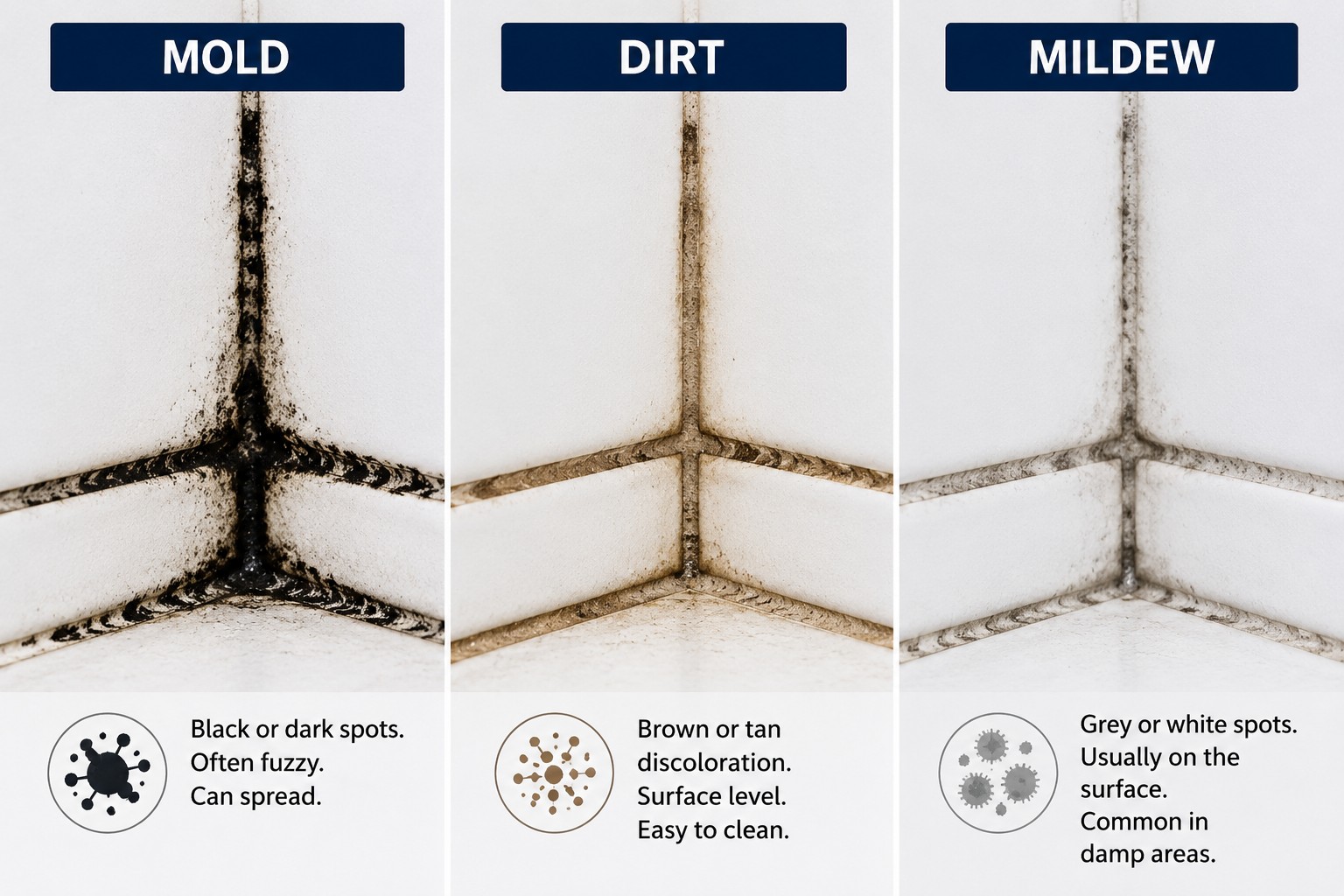
Mold, mildew, and dirt look similar at a glance but need different cleaning approaches.
When in doubt, treat it as mold and use the removal steps below — they're safe and effective for regular grime too, so there's no downside to being cautious. The one thing I'd flag: if you're seeing a musty smell that doesn't go away even after a thorough clean, that's a strong sign there's mold growing somewhere you can't see, possibly behind the tile itself.
Is Black Mold on Grout Actually Dangerous?
Yes — while a small amount of surface mold isn't going to send anyone to the hospital, black mold shouldn't be ignored or treated as purely cosmetic. Over time, exposure can contribute to a range of health issues, and the severity really does depend on how much you're exposed to and for how long.
Commonly reported symptoms from prolonged exposure include:
- Chronic coughing and throat irritation — often the first sign people notice, especially right after showering
- Respiratory infections or worsened asthma symptoms — mold spores are a well-documented asthma trigger
- Headaches and fatigue that seem to have no other clear cause
- Allergic reactions — sneezing, itchy eyes, skin irritation, particularly in sensitive individuals
The risk is highest for people with existing respiratory conditions, weakened immune systems, young children, and the elderly. If someone in your household falls into one of these groups, it's worth being more proactive about addressing grout mold quickly rather than letting it linger.
For most healthy adults, occasional exposure to a small, contained patch of grout mold isn't an emergency — but it's also not something to leave growing indefinitely just because it's inconvenient to deal with. If mold covers a large area, keeps spreading despite regular cleaning, or you notice a persistent musty smell that doesn't clear up, that's usually a sign of trapped moisture behind the tile rather than a simple surface problem — and in that case, cleaning the surface repeatedly won't actually solve anything.
How to Remove Black Mold From Grout
For most household cases, you can handle this yourself with ingredients you likely already have at home. I've gone into full step-by-step detail — including specific recipes, exact ratios, and timing for different severity levels — in my dedicated guide on how to remove mold from shower grout, but here's the process I use and recommend:
- Choose your solution. Mix an oxygen bleach solution — 2 tbsp oxygen bleach powder dissolved in 1 cup warm water — for general mold removal, or a borax paste (1 cup borax to 1/4 cup warm water) if the mold keeps recurring, since borax has mild antifungal properties that help prevent regrowth rather than just removing what's visible.
- Apply directly to the affected grout with a brush or cloth, making sure to work it into the grout lines rather than just across the surface.
- Let it sit for 15–30 minutes. Don't rush this step — the solution needs time to break down the mold at a chemical level, not just bleach its visible color. Applying and immediately scrubbing is significantly less effective.
- Scrub firmly with a stiff-bristle grout brush, working into the porous surface in small circular motions rather than dragging the brush across it.
- Rinse thoroughly with clean water and dry the area completely — lingering moisture undoes the work you just did and gives any surviving spores exactly what they need to regrow.
- Ventilate the bathroom for at least 20–30 minutes afterward, running the exhaust fan or opening a window, to help everything dry fully.
One important safety note: Avoid mixing bleach with vinegar or other acidic cleaners — combining chlorine bleach and acid produces toxic chlorine gas. Stick to one method per cleaning session, and never layer products on top of each other hoping for a stronger result.
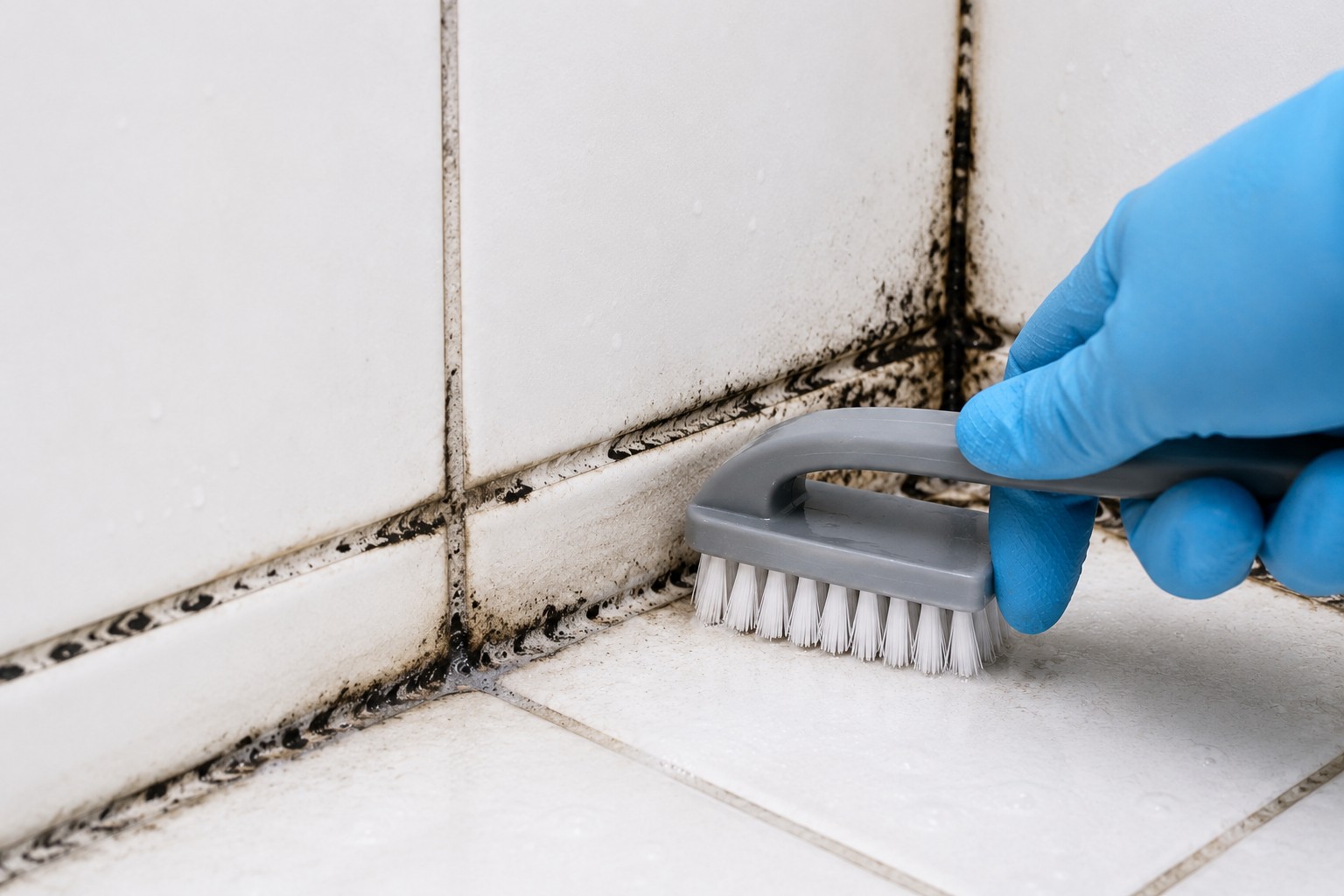
Let the solution sit for 15–30 minutes before scrubbing — rushing this step cuts effectiveness significantly.
Comparing Common Mold Removal Methods
Not every method works equally well for every situation. Here's how the most common options stack up, based on what I've tested across dozens of bathrooms.
| Method | Best for | Prevents regrowth? | Notes |
|---|---|---|---|
| Oxygen bleach solution | General mold, everyday severity | No — cleans, doesn't inhibit regrowth | No harsh chlorine fumes, safe for most enclosed bathrooms |
| Borax paste | Recurring mold that keeps coming back | Yes — mild antifungal properties | Don't need to rinse completely; light residue helps deter regrowth |
| Chlorine bleach | Severe, deep-set staining | No | Strong fumes, ventilate heavily; never mix with vinegar or ammonia |
| Hydrogen peroxide + baking soda | Light-to-moderate mold on white/light grout | No | Can lighten dark or colored grout with repeated use |
| Professional mold remediation | Large, spreading, or recurring infestations | Yes, when paired with moisture-source repair | Necessary if mold is suspected behind tile, not just on the surface |
How to Stop It From Coming Back
Cleaning mold once is easy. Keeping it from returning is the part most people skip, and it's the actual difference between doing this once a year versus once a month. A few habits make a real, measurable difference:
- Run the exhaust fan for 20–30 minutes after every shower, or crack a window if you don't have one. This single habit does more to prevent mold than any cleaning product.
- Squeegee the tile and grout after each shower — it takes about 20 seconds and removes most of the standing moisture mold needs to establish itself.
- Seal your grout if it hasn't been done recently. A penetrating sealer keeps water from soaking into the grout in the first place, which removes mold's main food and moisture source. My 7-step grout sealing guide walks through the whole process, and it's easier than most people expect.
- Do a light clean weekly with a simple baking soda and dish soap solution rather than waiting for mold to become visible. By the time you can see it, it's often already established in the grout's pores.
- Fix leaks promptly. Even a small, slow leak behind a wall or under a fixture can feed mold growth for months before it becomes visible on the surface.
When to Call a Professional
Most grout mold is a DIY job, but there are a few situations where I'd genuinely recommend bringing in a professional rather than continuing to clean it yourself:
- The mold covers a large area (more than roughly a square foot) or keeps spreading despite consistent cleaning
- You notice a persistent musty smell even when the visible surfaces look clean
- Mold keeps returning within days or weeks of cleaning, suggesting a moisture source you can't reach
- Anyone in the household has a compromised immune system, chronic respiratory condition, or is especially young or elderly
- You suspect water damage behind the tile from a past leak or flooding
In these cases, a professional mold remediation service can identify and address the actual moisture source — not just the visible symptom — which is the only way to permanently solve a recurring problem.
Frequently Asked Questions
Is black mold on grout dangerous?
Yes, prolonged exposure to black mold can cause respiratory irritation, allergic reactions, headaches, and worsened asthma symptoms, particularly in people with existing respiratory conditions or weakened immune systems. Small, contained patches are generally manageable to clean yourself; large or recurring infestations are worth taking seriously.
What causes black mold to grow on grout?
Black mold grows on grout because of a combination of moisture, poor ventilation, and organic material like soap scum and body oils that settle into the grout's porous surface. Unsealed or aging grout absorbs water more readily, making the problem worse.
Can I remove black mold from grout myself?
In most cases, yes. An oxygen bleach solution or borax paste, left to sit for 15–30 minutes and scrubbed with a stiff brush, handles the majority of household grout mold. Large-scale or deeply embedded infestations behind tile may need professional mold remediation.
How do I know if it's black mold or just dirt?
Black mold tends to look darker, slightly raised or fuzzy, clusters in corners and low points where water collects, and often carries a faint musty smell. Regular dirt and soap scum are usually flatter, grey or brown, and lift easily with a basic baking soda scrub.
Why does my grout mold keep coming back after cleaning?
If mold returns quickly after cleaning, it usually means the underlying moisture problem hasn't been addressed — poor ventilation, unsealed grout, or water trapped behind the tile from a leak. Cleaning removes the visible mold but won't stop regrowth unless the moisture source is fixed.
Is bleach or borax better for grout mold?
Bleach and oxygen bleach are effective at cleaning visible mold but don't prevent it from returning. Borax has mild antifungal properties, so it's a better choice for grout that keeps developing mold repeatedly, since it helps inhibit regrowth rather than just removing what's already there.
Can black mold on grout make you sick?
It can, particularly with prolonged exposure. Symptoms range from mild irritation like coughing and itchy eyes to more serious respiratory issues in people with asthma, allergies, or weakened immune systems. Most healthy adults experience only mild symptoms from occasional exposure, but ongoing exposure in a poorly ventilated bathroom is worth addressing rather than ignoring.
Final Thoughts
Black mold on grout is common, and in most cases, manageable without panic — but it's not something to just wipe over and forget about. Clean it properly using one of the methods above, dry the area fully afterward, and put a few small habits in place — running the fan, a quick squeegee, a good sealer — and you'll stop it from becoming a repeat problem every few weeks.
If it keeps coming back despite doing everything right, that's your sign to look deeper. Recurring mold almost always means there's moisture getting in somewhere you can't see, and no amount of surface cleaning will fix that on its own. In those cases, a proper inspection is worth far more than another round of scrubbing.