


By Jack Martin — Grout & Tile Cleaning Specialist, 10+ years testing grout cleaning methods, 500+ products personally tested.
Have you ever tried to lay tile on a floor or wall and gotten totally stumped about the right grout line size? You're not the only one. Most people never think about grout line size until the moment they start installing tile — and suddenly it feels like this one tiny detail could change the entire look of the space.
When I was working on my own kitchen, I spent hours choosing the perfect tiles. But the thing that actually confused me was the grout line size — that small gap between each tile had me scratching my head:
- Is 1/16 inch too narrow?
- Is 3/8 inch too wide?
The truth is, there's no single grout line size that works for every tile project. The right size depends on the tile type, tile size, and where the tile is being installed. That's why a grout line size chart can be extremely helpful.
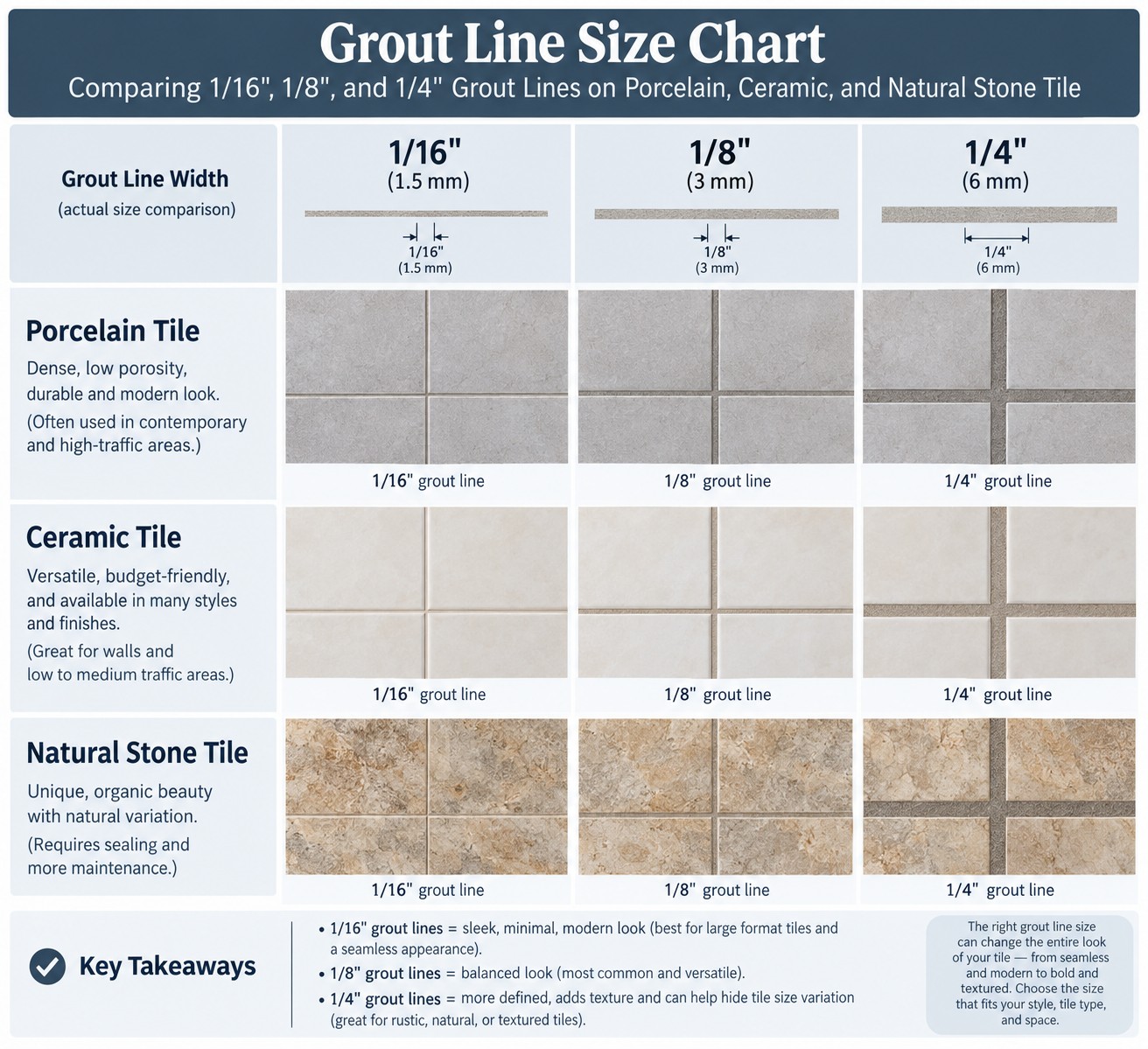
Quick Summary: Grout Line Size
A grout line size chart helps homeowners and professionals choose the correct grout line size based on tile type, tile size, and installation location. Standard grout spacing ranges from 1/16 inch for rectified porcelain and glass tiles to 1/4 inch for natural stone and rustic tiles. Choosing the proper grout line size improves tile alignment, reduces the risk of cracking, allows for natural movement, and enhances the overall appearance of the installation. For most ceramic tile projects, 1/8-inch grout lines provide the best balance between durability, appearance, and ease of installation.
Key Takeaways
- The most common grout line size for ceramic and porcelain tile is 1/8 inch, paired with sanded grout.
- Use a narrower 1/16-inch grout line size with unsanded grout for rectified porcelain or glass tile.
- Use a wider 3/16- to 1/4-inch grout line size with sanded grout for natural stone, slate, or handmade tile.
- Grout line size should match tile edge precision — rectified (machine-cut) tile can go narrower, handmade or natural tile needs a wider joint.
- A wider grout line size helps compensate for an uneven subfloor; a narrower one requires a flatter surface.
- Always check the tile manufacturer's spacing recommendation before finalizing your grout line size.
What Is the Standard Grout Line Size?
The standard grout line size depends on the type of tile being installed. Most ceramic and porcelain tiles use 1/8-inch grout spacing, while rectified porcelain tiles can use 1/16-inch grout lines for a modern appearance. Natural stone and handmade tiles typically require a 3/16-inch to 1/4-inch grout line size because their edges are less uniform. A grout line size chart is the best way to choose the correct spacing for your specific tile project.
What Is a Grout Line Size, Exactly?
Think of the grout line as the breathing space between tiles. It isn't just there to look pretty — grout holds tiles in place, allows them to shift slightly with the floor or wall, and keeps dirt and water out.
Not enough of a gap, and your tiles may crack. Too wide, and the finish can look rough or dated. That's why getting your grout line size right matters more than most people expect.
Why Does Grout Line Size Matter?
Here's the deal — your grout line size affects:
- The overall look — sleek and modern, or rustic and vintage? Grout line size changes everything.
- Tile performance — tiles shift slightly with temperature or weight. The right grout line size gives them room to move without damage.
- Cleaning and maintenance — a smaller grout line size means fewer areas for dirt to collect. Wider lines mean more scrubbing.
I learned this the hard way in a rental property. I used a wide grout line size for a "handmade" look, and a year later I was regretting it during every deep clean.
Understanding Common Grout Line Sizes
| Tile Type | Grout Line Size | Best For | Grout Type Needed |
|---|---|---|---|
| Rectified Porcelain | 1/16 in (1.5 mm) | Modern bathrooms, large-format floors | Unsanded |
| Glass Tile | 1/16 in (1.5 mm) | Shower walls, backsplashes | Unsanded |
| Ceramic Tile | 1/8 in (3 mm) | Floors, walls, kitchen backsplashes | Sanded |
| Large-Format Tile | 1/8 in (3 mm) | Living rooms, hallways, open floor plans | Sanded |
| Natural Stone | 1/8–3/16 in (3–5 mm) | Bathrooms, entryways, feature walls | Sanded |
| Slate & Travertine | 3/16–1/4 in (5–6 mm) | Patios, rustic kitchens, outdoor spaces | Sanded |
| Handmade / Rustic Tile | 1/4 in (6 mm) | Farmhouse, Mediterranean, traditional designs | Sanded |
Quick answer: Most ceramic tile projects use a 1/8-inch grout line size with sanded grout. Go narrower (1/16 inch, unsanded) for rectified porcelain or glass; go wider (3/16–1/4 inch, sanded) for natural stone or handmade tile.
1/16 Inch — The Sleek, Modern Grout Line Size
This is your best bet when working with precision-cut tiles like rectified porcelain or glass tile. The lines are so fine they're barely visible, which gives the whole surface a clean, minimal look.
Best for:
- Modern bathrooms
- Subway tiles
- Smooth porcelain floors
Heads up: a 1/16-inch grout line size needs flat surfaces and near-perfect tile spacing. If your wall or floor is uneven, it might not work out.
1/8 Inch — The Most Popular Grout Line Size
This is the happy medium, and it's the grout line size I recommend most often. Not too tight, not too loose — it gives the grout enough room to do its job without overpowering the tile.
Great for:
- Most ceramic tiles
- Kitchen backsplashes
- General floor tiling
I've used a 1/8-inch grout line size on three bathroom floors now — it's forgiving if you're not a pro tiler.
3/16 to 1/4 Inch — The Rustic Grout Line Size
A wider grout line size gives a more traditional, handcrafted look. It works well with uneven or natural tile like slate or travertine, where perfect alignment isn't realistic.
Best for:
- Rustic kitchens
- Outdoor patios
- Natural stone tiles
Pro tip: this grout line size requires sanded grout for stability, and it takes more elbow grease to keep clean.
What Influences Your Grout Line Size Choice?
Grout line size isn't just about personal style. Your tile choice, surface condition, and even room location all play a part. Here's what I've learned from real projects.
1. Tile Type
- Rectified tiles (machine-cut, super straight edges) can handle a narrower grout line size.
- Handmade or natural tiles need a wider grout line size because no two tiles are exactly the same.
2. Room Functionality
Wet rooms like bathrooms and kitchens need a grout line size that keeps water out but is still easy to clean. Go a bit tighter if you hate scrubbing. Go wider if you want more grip and texture underfoot.
3. Movement and Subfloor
Ever walked into a room where the tiles creak or shift slightly? That's usually bad prep. If your subfloor isn't perfectly level, a wider grout line size can save the day by giving the tile some room to move.
My Personal Experience Choosing Grout Line Sizes
In my own house, I used:
- A 1/16-inch grout line size with white subway tile in the bathroom — it looked slick, but spacing it perfectly was a full-day job.
- A 1/8-inch grout line size for large-format tile in the hallway — it looked modern, and installation was manageable even solo.
- A 1/4-inch grout line size with rough-cut terracotta tile in my sunroom — warm, rustic, and far simpler to match.
The lesson here: match your grout line size to the look you're going for and to the tile itself. It's not only about what looks good on Pinterest.
Sanded vs. Unsanded Grout: Which Grout Line Size Needs Which?
Once you've picked a grout line size, you'll also need to decide on the type of grout.

- Sanded grout is gritty and works best for a grout line size of 1/8 inch or wider.
- Unsanded grout is smoother and better suited to a grout line size smaller than 1/8 inch.
I once used unsanded grout on a 1/4-inch grout line size because I had some leftover — it cracked right away. Lesson learned.
How to Choose the Right Grout Line Size for Your Project
Still stuck on which grout line size to pick? Here's a quick cheat sheet based on common scenarios:
- Going modern? Stick to a 1/16 or 1/8-inch grout line size. Clean and seamless.
- Using natural tile? A 3/16 or 1/4-inch grout line size embraces the irregularity.
- Want easy maintenance? A narrower grout line size is easier to clean.
- Doing it yourself? Give yourself grace — go with a 1/8-inch grout line size or wider.
Final Word on Choosing Your Grout Line Size
Grout line size may sound like a small decision, but it can shift the entire mood of a room. It's not only about the tile — everything has to work together.
When you're tiling for the first time, it's tempting to eyeball the spacing or grab whatever plastic spacers the hardware store has on hand. Once you understand how different grout line sizes actually perform, you'll walk into any project with a much better plan.
There's no shame in dry-fitting a few tiles with different spacers and just looking at them before you commit — that's exactly what I do. Trust your eye and your tape measure equally.
Quick Recap: Grout Line Sizes at a Glance
- 1/16 inch — sleek and modern, but harder to install.
- 1/8 inch — balanced and beginner-friendly. The most common grout line size.
- 3/16–1/4 inch — rustic, natural, and more forgiving.
- Use sanded grout for wider lines, unsanded for tighter ones.
- Your tile type, room, and subfloor condition all affect the right grout line size for you.
If there's one thing I'd tell anyone starting a tiling job, it's this: respect the grout line size. It's the unsung hero of a flawless floor or backsplash. Get it right, and your tile will thank you — quietly, with no cracks or stains.
Calculate Your Grout Line Size Needs
Your grout line size has a big impact on how much grout you'll actually need. Use our free Grout Coverage Calculator to get an accurate estimate before you buy materials — it helps you avoid waste, save money, and plan your project with confidence.
Recommended Grout Line Tools
Based on the grout line sizes above, here's what I actually use on my own jobs.

Multi-Size Tile Spacer Set
One pack covers 1/16", 1/8", 3/16" and 1/4" grout line sizes — no need to buy separate spacers for every project.
Check Price on Amazon
Sanded Grout
Go with this for any grout line size 1/8" or wider — it resists cracking and holds up in high-traffic floors.
Check Price on Amazon
Unsanded Grout
Use this for any grout line size under 1/8" — smoother finish, won't scratch glass or polished tile edges.
Check Price on Amazon
Rubber Grout Float
Makes packing grout into narrow grout line sizes way easier if you're doing this solo, like I usually do.
Check Price on AmazonFinal Thoughts on Grout Line Size
Choosing the right grout line size is one of those small decisions that has a surprisingly big impact on the finished look and durability of your tile project. Whether you're installing a kitchen backsplash, bathroom floor, or outdoor patio, the right grout line size helps prevent tile movement, improves durability, and creates a clean, professional finish.
There isn't a one-size-fits-all answer. The best grout line size depends on your tile type, installation area, and the style you're trying to achieve. That's why using a grout line size chart before you begin is one of the easiest ways to avoid costly mistakes and get better results.
If you're still unsure, test a few spacers with your tiles before installation. Seeing different grout line sizes in person makes it much easier to choose the spacing that looks and performs best. A little planning today will help your tile installation look great and last for years.
Frequently Asked Questions About Grout Line Size
So what size grout line should I use between floor tiles?
A grout line of 1/8 inch to 3/16 inch is optimal with most floor tiles a grout line that is too thick will weaken the installation, where too thin will not provide the look.
Is it possible that I use a very thin grout line on all tiles?
Not always. Thin grout lines (such as 1/16 inch) are effective only when your tiles are carefully off and flawlessly even, i.e. rectified tiles only.
Is grout color an influencer on how the grout line size appears?
Yes! Contrasting grout color will emphasize grout lines more and matching color will merge them together- this distorts overall appearance size.
Is there a standard grout line size I should follow?
There’s no strict rule, but 1/8 inch is a commonly used “safe bet” size for many residential tile installations.