

Published: August 19, 2026

By Jack Martin — Grout & Tile Cleaning Specialist, 10+ years testing grout cleaning methods, 500+ products personally tried.
Use a 1/8-inch grout line for most floors and high-traffic areas — it forgives minor tile size variation and holds up better long-term. Reserve a 1/16-inch grout line for rectified tile and a seamless, high-end look, but expect a harder installation and less tolerance for error. For wood-look plank tile specifically, 1/8-inch is almost always the safer pick.
A 1/8 grout line is the most practical joint width for most tile installations, offering the right balance between durability and forgiveness for minor tile imperfections. When it comes to tile installation, even the smallest details can make a huge difference in the final result. One of the most important choices homeowners face is selecting the right grout line width. Whether you’re updating a bathroom, installing a modern kitchen floor, or designing an outdoor patio, understanding the difference between 1/16 vs 1/8 grout lines is essential. While these grout sizes may seem similar, they can significantly impact the overall appearance, durability, and maintenance of your tile project. In this guide, I’ll walk you through the key differences between 1/16-inch and 1/8-inch grout lines to help you choose the best option for your space, especially for wood-look tile installations.
1/8 vs 1/16 Grout Line: Head-to-Head
I get asked this exact question more than almost any other on the site, so here’s the direct comparison before we get into the details. When I’m choosing between a 1/8-inch and a 1/16-inch grout line, these are the four things that actually decide it for me:
Tile Type
1/8″: Non-rectified tile, wood-look plank, natural stone.
1/16″: Rectified tile only.
Skill Level
1/8″: DIY-friendly.
1/16″: Professional installer recommended.
Best Room
1/8″: Floors, kitchens, outdoor patios.
1/16″: Bathroom walls, glass backsplashes.
Durability
1/8″: More forgiving, easier repairs.
1/16″: Higher cracking risk over time.
My take: if you’re not 100% sure which one your project needs, go with 1/8-inch. It’s the safer, more forgiving choice for the vast majority of tile jobs I’ve worked on.
1/16 vs 1/8 Grout Line for Wood-Look Tile
Wood-look porcelain planks are popular for their natural hardwood appearance combined with the durability of tile. But because planks can sometimes warp slightly during manufacturing, grout width plays a crucial role in achieving a smooth, professional finish.
-
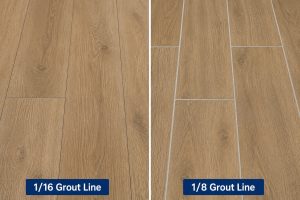
1/8-inch grout line: Adds flexibility to hide small imperfections, warping, or variations in size. This makes it a practical choice for non-rectified planks.
-
1/16-inch grout line: Creates a sleek, seamless look but requires rectified tiles, a perfectly level subfloor, and precise installation to avoid lippage (uneven tile edges).
For most homeowners and DIY projects, 1/8-inch grout lines are considered the safer option, offering a good balance of beauty and practicality.
Understanding the 1/16-Inch Grout Line
A 1/16 grout line is one of the narrowest joints available. It’s often used in high-end, contemporary interiors where the goal is to create the illusion of a continuous surface.
Benefits of 1/16 Grout Lines
-
Modern aesthetic: Ideal for spa-like bathrooms, minimalist kitchens, and sleek living spaces.
-
Tile-first focus: Allows patterns, textures, and finishes to stand out without distraction.
-
Less visible grout: Fewer lines mean less grout to clean and maintain.
Drawbacks of 1/16 Grout Lines
-
Low tolerance: Any slight tile variation or uneven surface becomes noticeable.
-
Unsanded grout required: Less durable in high-traffic areas.
-
Challenging installation: Best suited for professional installers and rectified tiles.
If your goal is a designer finish, 1/16 grout lines deliver—but they require near-perfect conditions and expertise.
What Is a 1/8 Grout Line?
A 1/8-inch grout line is the industry-standard joint width for most residential tile installations — floors, kitchens, and bathrooms. It’s wide enough to absorb minor tile size variation and warping (common in wood-look plank tile) while staying easy to clean and reseal. Most tile installers default to 1/8-inch unless you’re using rectified tile with a designer, seamless look in mind.1/16 vs 1/8 Grout Line: Quick Comparison Table
Not sure which joint width fits your project? This table breaks down installation tolerance, tile compatibility, maintenance, and room suitability for a 1/8 grout line versus a 1/16-inch grout line, side by side.| Factor | 1/8-Inch Grout Line | 1/16-Inch Grout Line |
|---|---|---|
| Installation Tolerance | Forgiving Hides minor warping and size inconsistencies |
Requires rectified tiles and a perfectly level surface |
| Visual Style | Subtle definition, works for classic and rustic styles | Modern Nearly seamless, high-end look |
| Tile Compatibility | Works with rectified and non-rectified ceramic, porcelain, stone | Best for rectified porcelain, glass, or marble |
| Grout Type Needed | Sanded grout (added strength) | Unsanded grout |
| Maintenance | Easier Simple to clean, reseal, and repair |
Less grout to clean, but harder to repair |
| Best For | High-traffic floors, wood-look tile, outdoor patios | Spa bathrooms, minimalist kitchens, glass backsplashes |
| Skill Level Required | DIY-Friendly | Professional installer recommended |
How Room Type Influences Grout Size
Different rooms call for different grout line strategies. Here’s a breakdown:
-
-
1/16-inch: Perfect for walls, offering a spa-like finish.
-
1/8-inch: Better for floors, where practicality and durability matter.
-
Kitchens Tile
-
1/16-inch: Stylish for backsplashes with glass or glossy tiles.
-
1/8-inch: Recommended for floors to withstand heavy traffic.
-
-
Living Rooms Tile
-
1/16-inch: Best for modern, open-plan spaces.
-
1/8-inch: Works well for rustic or transitional designs.
-
-
Outdoor Areas
-
1/8-inch: Handles temperature changes and natural expansion better.
-
How Grout Color Impacts the Final Look
Grout width is only half the decision—color selection can completely change the perception of your tiles:
-
Matching colors: Creates a seamless, continuous surface (best with narrow joints).
-
Contrasting colors: Highlights each tile and emphasizes layout patterns.
-
Neutral tones: Balance visibility with practicality, ideal for hiding dirt in high-traffic areas.
Installation Tips for Better Results
Whether you go with 1/16 or 1/8 grout lines, these best practices ensure long-lasting results:
-
Use tile spacers: Keep joints consistent across the entire layout.
-
Level the subfloor: Prevents lippage and ensures smooth alignment.
-
Match grout type to joint size:
-
1/16-inch: Use unsanded grout.
-
1/8-inch: Use sanded grout for added strength.
-
-
Plan for expansion joints: Especially in large rooms or outdoor projects.
-
Test grout color before committing: Apply a small section to see how it looks with your tile.
Practical Applications: Which Size Works Best?
-
Luxury Spa Bathroom → 1/16-inch for seamless elegance.
-
Farmhouse Kitchen Floor → 1/8-inch to handle rustic planks and wear.
-
Outdoor Patio → 1/8-inch to allow for expansion and weather shifts.
-
Modern Glass Backsplash → 1/16-inch to highlight reflective finishes.
Long-Term Maintenance Considerations
Regardless of grout line width, proper care extends the life of your installation:
-
Sealing: Even stain-resistant grout should be sealed annually.
-
Cleaning: Use pH-balanced cleaners to avoid damage or discoloration.
-
Repairs: Narrow grout lines are harder to re-grout, so regular inspection is key.
-
Inspection: Check for cracks or gaps, especially in moisture-prone areas like showers.
Final Verdict: 1/16 vs 1/8 Grout Lines
Struggling to decide between 1/16 vs 1/8 grout lines for your tile project? The right choice depends on the look you want, the type of tile you’re using, and how much durability you need over time.
Choose 1/16-inch grout lines if your goal is a sleek, seamless, high-end finish. These ultra-thin grout joints work best with perfectly rectified tiles and professional installation, creating a clean modern appearance with minimal visible grout.
Choose 1/8-inch grout lines if you want a more practical and durable solution. They are easier to install, better at handling slight tile variations, and ideal for high-traffic areas or wood-look tile flooring where flexibility matters.
In short, if style and a luxury finish are your top priorities, go with 1/16 grout lines. If you want easier installation, stronger performance, and long-term reliability, 1/8 grout lines are usually the better choice.
Frequently Asked Questions (FAQs)
Which grout works for 1/16-inch grout lines?
Unsanded grout is the right choice for a 1/16-inch grout line. It has a smoother, finer texture that fits into narrow joints without scratching the tile edges, unlike sanded grout which is designed for wider joints and added strength. For 1/8-inch grout lines and larger, sanded grout is the standard because the added sand improves durability and reduces shrinkage.
What’s the best grout line size for 12×12 tiles?
For 12×12 tiles, a 1/8-inch grout line typically works best. It gives you enough room to correct for minor size differences between tiles during installation, which is common with 12×12 sizing. If you’re working with precision-cut, rectified 12×12 tile and want a more seamless look, you can go as narrow as 1/16-inch, but expect a less forgiving installation process.
Which grout size is best for wood-look tile floors?
Most installers recommend a 1/8-inch grout line for wood-look tile floors. Wood-look plank tile is prone to slight warping during manufacturing, and a 1/8-inch joint gives enough flexibility to absorb that variation while still creating a natural, plank-style appearance. Going narrower than that on wood-look tile increases the risk of visible lippage and uneven edges.
What is a standard 1/8 grout line used for?
A 1/8 grout line is the industry-standard joint width for most residential tile work, including floors, kitchens, and bathrooms. It’s wide enough to handle normal tile size variation and expansion, strong enough for high-traffic areas, and easy enough to clean, reseal, and repair over time. Most tile installers default to 1/8-inch unless a project specifically calls for a narrower, high-end look.
Can you mix 1/16 and 1/8 grout lines in the same room?
Yes, though it’s more common to switch grout sizes between surfaces rather than within the same surface. For example, many homeowners use a 1/16-inch grout line on bathroom wall tile for a seamless look, while using a 1/8-inch grout line on the floor for durability. Mixing sizes on the same flat surface is generally not recommended, since it can look inconsistent.
Does a 1/8 grout line need to be sealed?
Yes. Any 1/8 grout line using sanded grout should be sealed after installation and resealed roughly once a year, especially in moisture-prone areas like showers and kitchen floors. Sealing helps prevent staining, mold growth, and water absorption, which extends the life of the grout and keeps cleaning easier over time.
How wide is a 1/8 grout line compared to other sizes?
A 1/8 grout line measures exactly 1/8 of an inch (about 3.2mm) wide, placing it between a narrow 1/16-inch joint and a wider 3/16-inch or 1/4-inch joint often used for rustic or handmade tile. It’s considered the middle-ground, all-purpose size for most residential tile installations.